

You stand with a printout in your hand, somewhere between the regular paper bin and the confidential container. Your eyes go from left to right. "Hmm ... this doesn't seem very secret ... but still not something I would want to leave lying around on the street either." When in doubt, of course, it belongs in the confidential container with the lock on it. Though the best step toward a zero-waste office remains simply to think twice before printing or writing down anything with sensitive information at all. In this blog, the zero waste experts take you through the world of confidential paper and how it fits into a zero waste office!
What is confidential paper?
Confidential paper is any document containing information that should not fall into the wrong hands. Think of personal data, contracts, financial data, internal reports and anything else that is company-sensitive. In short: paper containing data that would make you extremely unhappy if it ended up on the street! Of course, it will be labeled as confidential paper when you decide to put it in the best waste bins.
What do you do with confidential paper?
So any documents, papers, archives, notes, you name it. Anything that contains business-sensitive information or is reducible to personal details falls under the heading of confidential paper and will need to be destroyed as such. To ensure that this is securely destroyed, we work with certified service providers. The most important standard for this is DIN 66399, which specifies exactly how finely paper should be shredded and what security measures are required. For the total data security chain, ISO 27001, an information security standard, is often used. These certifications guarantee that documents are securely destroyed and that no one can see them.
Therefore, when you have decided that the document you are disposing of contains such sensitive information, throw it in the appropriate containers. These containers are identified by a closed slot and there is always a lock on the container. Only the service provider can open it.
How is confidential paper processed?
Once the confidential paper in the locked container is picked up by the processor, it is transported sealed, directly to a secure processing facility. There, the processing process begins. The paper is neither viewed nor sorted by humans; it goes directly into an industrial shredder or pulper. Within minutes, a pile of documents turns into a pile of small shreds or wet fiber mass. It may feel a bit of a waste to process paper so roughly, but this is precisely the moment when the "old" loses its value and the foundation is laid for completely new material.
The purification process: from chaos to clear pulp
The next step is to purify the pulp. Staples, paper clips, windows of envelopes, glue, labels, everything that is not pure fiber is taken out. This is done through a combination of sieves, magnets and flotation techniques that loosen the ink particles and float them to the surface. What remains is a thick, soft, light gray fiber knit. Not yet beautiful, not yet white, but completely ready to serve as raw material again. It's very fascinating how something that looks like worthless waste actually forms the basis of a new paper cycle.
New fibers, new strength
Paper fibers become slightly shorter after each round of recycling. After five to seven cycles, they are too weak to form good paper on their own. Therefore, fresh, new wood fibers are added to the pulp at this stage. These give the mixture strength again, so that the final product does not fall apart and has the same quality as "new" paper. It is a clever collaboration between old and new: the recycled material provides the mass, the new fibers bring the strength.
From pulp to product: the moment when it becomes paper again
When the pulp is completely clean and strengthened, it is spread over large, moving sieves. Water is squeezed out, the wet mat is dried on huge heated rollers, and slowly but surely a new sheet of paper emerges. In reality, not sheets, but giant paper rolls weighing hundreds of pounds. From there, the material goes to factories that make exactly what is needed: toilet paper, cardboard, packaging, notebooks, or even new office printing paper.
Coming full circle
Every piece of paper that makes this journey makes our waste stream lighter and our resource cycle stronger. What was once a pile of confidential documents returns in a guise that we use daily, often without realizing it. Zero waste it's not quite, but at least it gets back into the chain 6-7 before it needs new fiber. Of course, the very best thing to do is to make sure you don't have anything on physical paper that is confidential, so you don't have to have it destroyed through this route either. After all, the most sustainable waste is the waste that is avoided.
How does this differ from regular paper disposal?
Although confidential paper ultimately goes through the same recycling process as regular paper, the path to it is quite different. It starts in a completely secure chain: locked containers, sealed transport and direct destruction in a shredder or pulper, without anyone being able to see or sort the documents. Only once everything has been ground into unrecognizable pulp does it connect to ordinary paper recycling. The only real difference? So confidential paper gets that extra intermediate step in the shredder or pulper before it goes back out into the world as a raw material.
As an organization, how do you reduce the amount of confidential paper?
Less confidential paper starts with working smarter. Consider digital workflows for contracts, HR files and quotes to reduce printing. Insert "print only as needed" by default on printers, and use secure digital storage instead of paper archives. It also helps to train employees: what doesn't need to be printed at all? And what can you anonymize before it goes to paper? The less paper with sensitive information, the smaller the confidential waste stream, and that's how you get closer and closer to a zero waste office!
Read also
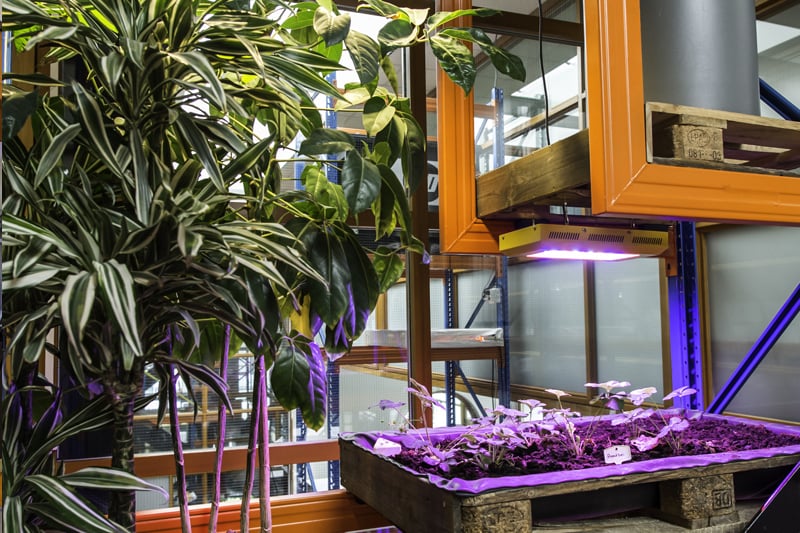
Zero Waste Office: office plants
We regularly get curious looks from passersby through our windows. Because working in a greenhouse, holding meetings on a wind turbine blade, or generating your own electricity via an exercise bike isn’t something you see every day. On our website we are happy to tell you more about our office environment.
Ask our experts
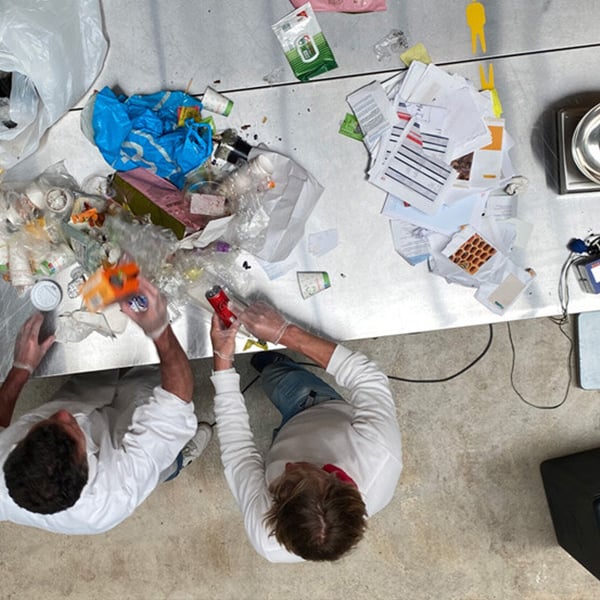
Are you unsure whether certain items in your office are unnecessarily ending up in residual waste? Our experts are happy to help. Send your question to marketing@milgro.nl and we will get back to you with a solution for your residual waste stream.
Read also

Zero Waste office: office chairs

Stay informed
Follow us on LinkedIn. Here we share the latest news on regulations, circular topics and developments in the industry. You can also subscribe to our newsletter. Curious what Milgro can mean for your operations and waste processes? Feel free to get in touch.