



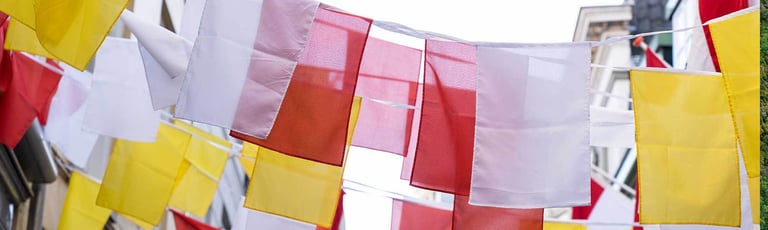
It’s 2:30 a.m. on the Markt in Maastricht. Confetti covers the streets, empty beer mugs are scattered across the square, and bags of residual waste pile up along the sidewalks. Carnival is a celebration of music, costumes and community, but it also puts municipal waste management systems to the test.
For cities in Brabant and Limburg, Carnival is more than a cultural highlight. It is a large-scale stress test of local waste policy, street cleaning logistics and public awareness campaigns. Fortunately, many municipalities have implemented smart and practical measures to reduce waste and keep city centres clean while thousands of partygoers celebrate.
In our blog series, “A view of at Waste From…”, we usually explore waste management approaches beyond the Netherlands and Belgium. This time, we stay closer to home. From Oeteldonk ('s-Hertogenbosch) to Jocus Riék (Venlo), how are major Dutch carnival cities reducing waste during large-scale events — and what best practices can they learn from each other?
Tilburg
In Tilburg, extra waste spots and facilities are placed during carnival, such as fences and extra bins on squares. The cleaning team is reinforced so that visitors can party safely and the streets are not drowned in confetti and beer cups.
Breda
Breda focuses on waste separation and recycling, and during carnival this takes on an extra dimension. On average, a Breda resident generates around 476 kilos of household waste per year, of which 36% is residual waste. During Carnival celebrations, however, the pressure on waste collection increases significantly. Additional collection rounds are scheduled for hospitality waste, and reusable soft cups cups are introduced. These measures have previously reduced street and event waste by approximately 30%, while more than 35,000 kilos of waste were collected(BredaVandaag, 2024) . In addition, glasses and cans are banned in the city centre.
Den Bosch
In Den Bosch, regular waste collection during Carnival is sometimes postponed or adjusted. In previous years, this led to temporary accumulation of waste, for example due to strikes, but the city puts in extra cleaning rounds to keep the center party-ready. In addition, Den Bosch is cooperating regionally on post-separation of residual waste.
Eindhoven
Eindhoven is taking preventive measures during Carnival: there is a temporary ban on disposable plastic in public spaces, keeping the streets cleaner, even with thousands of revelers.
Maastricht
In Maastricht, the municipality is placing additional shipping containers for cups and other materials, with separate streams for clean and contaminated cups. The regular door-to-door collection will be temporarily adjusted, and extra cleaning rounds will ensure that the city center looks presentable again after the festivities.
Venlo
Venlo shows how effective carnival waste policy can be if you tackle it structurally. In 2024, the municipality switched completely to reusable hardcups with a depositduring carnival , mandatory for all open, city-wide events. This resulted in 75% less waste: where previously four garbage trucks were needed, it was nowdown to one. According to the municipality, this saved hundreds of thousands of disposable cups. The strength of the system lies in the cooperation: one cup, one supplier and one city-wide deposit system, allowing visitors to return their cups anywhere. By involving the hospitality industry, municipality and organizers early on, a level playing field was created that made the system workable and accepted. Venlo is thus considered a concrete example of how carnival policy can contribute to a cleaner streetscape and a circular approach.
National/regional impact
It is not only cities that notice the impact: during carnival , waste at stations and on the railroads increases sharply. The NS, for example, deploys some 250 extra cleaners because confetti, residual waste and other debris require much more attention than on regular weekends. So you see that carnival is a national challenge for waste management, not just locally in Brabant and Limburg.
Best practices: these cities really get it right
There are cities and initiatives that can serve as examples of successful carnival waste policy:
- Oeteldonk (Den Bosch): extra litter bins, visible cleaning team and cooperation with Stichting Nederland Schoon ensured that the station square and center remained relatively clean , even during the busiest days.
- Toolkit & guidelines: organizations such as Nederland Schoon and Supporter van Schoon offer municipalities practical tools for litter-free events, including prevention, separation and influencing behavior.
- Landelijke Aanpak Zwerfafval (LAZ): supports municipalities in the structural approach to litter, including during major events such as Carnival.
In addition, innovative experiments such as reusable cups in Venlo or soft cups in Breda are examples of how preventive measures can significantly reduce the amount of litter.
What do we learn from this approach?
During Carnival, cities show that waste policy is more than just emptying containers. Extra collection days, reusable cups, mobile recycling centers, temporary bans and adjusted collection are necessary to keep the city clean. Best practices such as Den Bosch, Venlo and Breda show that planning, collaboration and innovation are crucial to keeping large events sustainable.
So partying and cleanliness go hand in hand, if you organize it right.

Read also

A view of waste from Japan
Staying uptodate
Want to stay up to date on all new developments? Follow us onLinkedIn, listen to the podcast "Raw material for thought," or subscribe to the newsletter. Are you curious about what Milgro can do for your operations and waste process? Then get in touch.
Stay informed
Follow us on LinkedIn. Here we share the latest news on regulations, circular topics and developments in the industry. You can also subscribe to our newsletter. Curious what Milgro can mean for your operations and waste processes? Feel free to get in touch.
.jpg?width=380&name=Uitgelichte%20afbeelding%20(97).jpg)