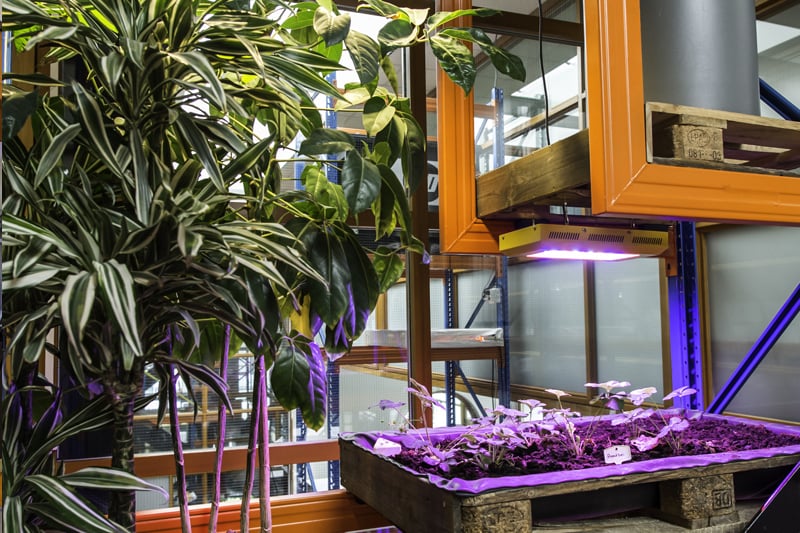




Office plants: good for the atmosphere as well as for air quality. In an average office with 100 employees there are easily 30 to 50 plants. Yet not all of them stay beautiful for the same length of time, no matter how careful you are. Sometimes a plant gets too little or too much water, too little or too much sunlight, or it becomes overgrown.
Then the question arises: where do you leave a plant that has seen its best days? In this blog, our Zero Waste Experts explain the best way to separate the different parts-from the plant itself to the potting soil to the flower pot.
Office plants: the benefits
Plants contribute to a healthy work environment. Because plants absorb CO2 and release oxygen, plants help improve air quality. This benefits concentration, alertness and productivity. In addition, plants regulate humidity. Do you know the feeling of fatigue or headaches after a working day? In offices with lots of computers and air conditioning, the air is often dry, which can lead to these complaints. Plants bring that balance back.
Not surprisingly, more and more organizations are opting for green walls or large office plants such as the spoon plant or dragon's blood tree.

Where do you leave an (office) plant when it is "used up"?
Even with the best care, there comes a time when a plant has had its best time. Then it's good to know how to separate the different parts. After all, not everything belongs in the same bin.
The office plant
Did you know that you don't always have to throw away an office plant right away? Healthy parts can often be cut off and used as cuttings. Place the cutting in water or soil so that a new plant can grow from it.
In addition, you can use parts of the plant for creative DIY projects, think of natural wall decorations or drying flowers and leaves. Fun to work on this with colleagues.
Is the plant really "used up"? Then throw the leaves and stems in the organic waste. In a composting plant this is converted into compost: the natural breakdown of organic waste, such as food waste and garden waste, into a nutritious soil improver. The waste naturally contains bacteria and fungi that, given enough air and moisture, slowly break down the material into a crumbly, nutritious soil for plants and soil.
Worm composting
Do you have a worm hotel in your office? Then you can put smaller amounts of plant scraps, such as leaves or potting soil, in there as well. Compost worms eat these scraps and excrete them into a fine, crumbly compost that is rich in nutrients. Because the process requires little space, produces no odor and can be used locally, worm composting is increasingly used by schools, businesses and municipalities. In this way, organic waste is given a new function as compost instead of ending up as residual waste.
Not all plants are suitable for the worm hotel. Some species contain substances that actually repel worms or slow down decomposition. Consider:
- Strongly scented or hardy plants such as lavender, rosemary, eucalyptus and bamboo.
- Plants with thick, woody stems; these break down too slowly.
- Diseased plants or plants with mold. It is better to throw these in the garbage to avoid contamination.
- Plants that have been treated with pesticides or fertilizers; these can be harmful to the worms.
It is also important to always add small amounts of plant residues and mix them with other organic material such as coffee grounds. This keeps the compost process balanced and prevents it from scalding or smelling.
The potting soil
You can often reuse potting soil by removing the top layer and mixing the rest with new potting soil. Used potting soil still contains fibers and minerals that improve the structure and airiness of the soil. So there is no need to throw away all the potting soil. You can then dispose of the top layer with the organic waste.
Be careful with old potting soil that is mixed with fertilizer, clay granules or pieces of plastic (e.g. carrot nets). These do not belong there and can lower the quality of the VGF waste. It is best to remove these leftovers by hand: remove the largest pieces or sieve the potting soil with a coarse kitchen strainer. This will leave only the natural material that can be added to the organic waste.
The flower pot or planter
Did you know that many garden centers and hardware stores have collection points for old plastic plant pots? There they are sorted and recycled so that the plastic can be reused.
Do you have a ceramic or earthenware pot? You can often reuse those. Put a new plant in it or use it as a pencil holder. No longer have a use for it yourself? Then take the pot to the thrift store so that someone else can enjoy it.
Plastic plants: a sustainable initiative?
At first glance, plastic plants seem like a sustainable alternative: they last a long time and require no care. Yet from a Zero Waste point of view , they are less than ideal. They are made of different materials, such as plastic, metal and paint, making them difficult to recycle. These composite materials cannot be easily separated, so they often end up in residual waste.
Office plants in the office at Milgro
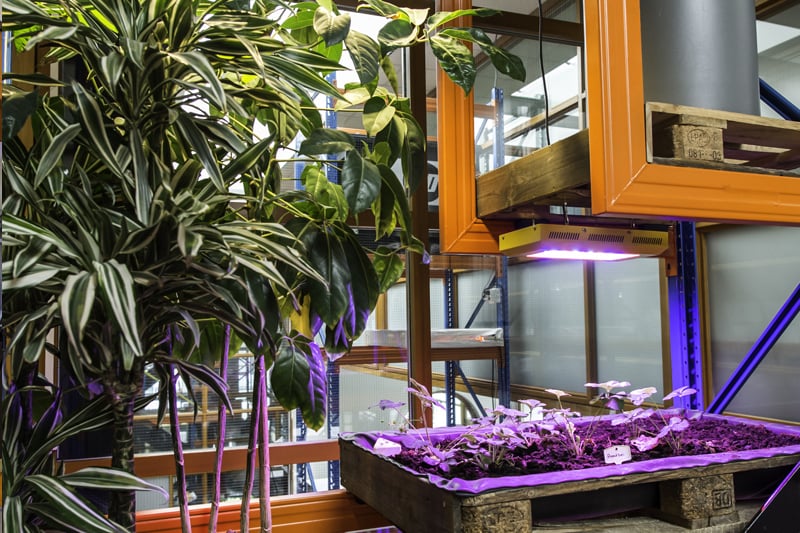
You'll also find plenty of office plants at Milgro. In the orangery (a meeting room) is a winter garden where a variety of herbaceous plants are tended. The space is filled with beautiful flowers and plants and forms a green, inspiring environment. At the center is a long table composed of four recycled tables.
In addition, one of our stairwells mimics a biosphere . Rainwater is collected from the roof and serves as food for the plants, which in turn convert CO₂ into oxygen.
Curious glances from passersby are regularly cast through our windows. Because working in a greenhouse, meeting at a windmill blade or generating your own electricity via an exercise bike; it's not everyday. On our website we are happy to tell you more about our office environment.
Ask our experts
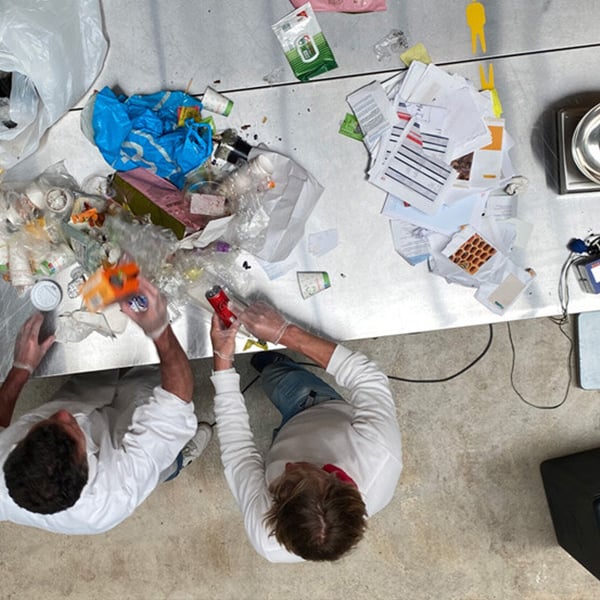
Are you unsure whether certain items in your office are unnecessarily ending up in residual waste? Our experts are happy to help. Send your question to marketing@milgro.nl and we will get back to you with a solution for your residual waste stream.
Read also

Zero Waste office: office chairs
Stay informed
Follow us on LinkedIn. Here we share the latest news on regulations, circular topics and developments in the industry. You can also subscribe to our newsletter. Curious what Milgro can mean for your operations and waste processes? Feel free to get in touch.