



What we used to see as an American bargain madness is now well established among us. High discounts lure people en masse to the Antwerp Meir, the Gents Veldstraat or the Brussels Nieuwstraat and to webshops. We all want to score bargains, but do we give enough thought to the consequences of our behavior?
Of course there is no problem in waiting for a big reduction to buy something you really need. But to often the Black Friday discounts and the marketing machines behind them prompt us to make impulse purchases, order stuff faster and, above all, make less conscious choices.
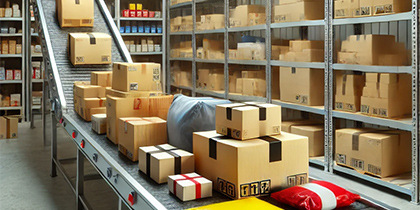
Who among us dwells on the spike in logistics traffic, the pile of extra packaging material that ends up in the trash or the increase in returns that a day like Black Friday causes? Recent research conducted by Milgro in the Netherlands shows that 75 percent of consumers would choose more carefully if returning goods cost money. Although in Belgium return charges are already a little more established, there are still massive numbers of items returned around Black Friday. Every return has an ecological footprint. Think transportation, packaging materials, damaged products that are no longer saleable. Who knows, these often just disappear into the incinerator even though they are still usable. That's a waste. A waste of raw materials, of energy and of CO2 it took to produce them.
The same Milgro survey shows that 80 percent of Dutch people want more transparency about what happens to returned products. Perhaps a lot of Belgians would also buy smarter if they knew what happens to their returned items behind the scenes. Now they just disappear from sight, creating the illusion that we can buy without consequences, that everything we buy can circulate for free and that we can let our buying behavior depend on commercial calendars.
This is exactly what makes Black Friday problematic. The current consumption model is incompatible with a livable future. Black Friday is a call for more. More stuff, more transportation, more waste. This in a context where raw materials are becoming scarcer, energy more expensive and where the waste mountain continues to grow.
Fortunately, we also see counter-movements in Belgium. More and more entrepreneurs are taking on 'Local Friday' or 'Green Friday' and aiming for quality over quantity, service instead of speed. Unfortunately, such initiatives are currently no match for the buzz that Black Friday generates every year. The slogan 'Buy Belgian' disappears among roaring marketing campaigns of international retailers and Web shops. For now, short-term economic benefits still prevail over long-term sustainability choices.
So is this piece a call to abolish Black Friday? No not at all. Although over half of the Dutch (54%) we surveyed wouldn't mind, as far as I am concerned Black Friday can stay. We can also turn it into something positive. It's an opportunity for retailers to help consumers make the right choices. By communicating transparently about return flows, by positioning second-hand and refurbished as fully-fledged alternatives, or by offering products that were designed to last and be repaired. Now if only we would invite the huge marketing efforts around Black Friday to look at real value, use and responsibility. Then we could not only score bargains but also avoid paying the high price for thoughtless consumption later.
Read the article back in Sudinfo
Stay informed!
Want to stay up to date with the latest developments? Follow us on LinkedIn and Instagram or subscribe to our newsletter. Curious about what Milgro can do for your operations and waste process? Feel free to get in touch .

Stay informed
Follow us on LinkedIn. Here we share the latest news on regulations, circular topics and developments in the industry. You can also subscribe to our newsletter. Curious what Milgro can mean for your operations and waste processes? Feel free to get in touch.
.jpg?width=380&name=Uitgelichte%20afbeelding%20(79).jpg)
.jpg?width=380&name=Uitgelichte%20afbeelding%20(62).jpg)