


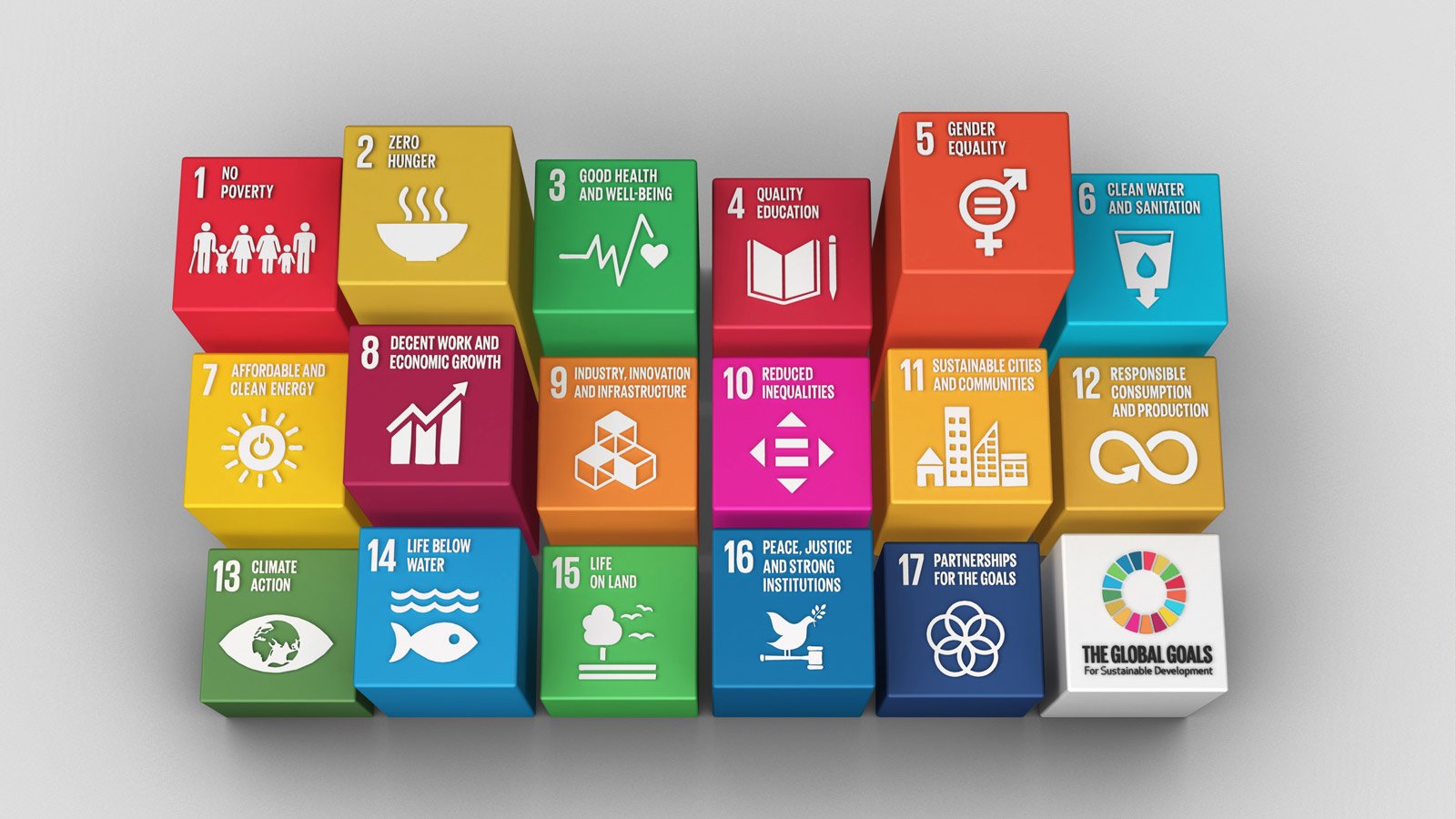
The Sustainable Development Goals (SDGs) were adopted by the United Nations in 2015. They are not legally binding, but offer companies and governments direction and practical tools to make social and environmental improvements. There are 17 goals in total, from poverty reduction to partnership to achieve goals.
In this blog, we zoom in on SDG 12: responsible consumption and production. You will read what SDG 12 means, why this goal is important for companies and how Milgro contributes to achieving the Sustainable Development Goals (SDGs).
The goal of SDG 12 is to ensure sustainable consumption and production patterns. It is about how we make, use and dispose of products, with as little negative impact on people and the environment as possible.
Why is SDG 12 important?
The urgency of SDG 12 is great. Currently, the world is only 6.9% circular. That means 93% of all raw materials are lost. Population growth, climate change and geopolitical tensions, among others, are further increasing the pressure on raw materials.
For companies, this poses a concrete risk. 49% of Dutch companies expect raw material scarcity to result in higher prices for both products and services. They anticipate having to pass some of this cost increase on to their end customers. Nineteen per cent of companies are even so dependent on these raw materials that they see the current raw material scarcity as a concrete business risk.
Keeping materials in circulation as long as possible through reuse, repair and recycling creates less waste, less waste and reduces the pressure on raw materials.
In addition, the social aspect also plays a role. Unfair working conditions, such as low wages and poor working conditions, are still common. SDG 12 provides guidance for companies to improve their social and environmental impact.
What are the goals of SDG 12?
SDG 12 is elaborated in sub-goals. Together, they show how countries, companies and consumers can concretely contribute to responsible consumption and production. In 2015, SDG 12 started with eight elaborated sub-goals. Later, three additional goals were added, identified by the designations 12.a, 12.b and 12.c.
SDG 12.1 Policies for sustainable production and consumption
Countries are encouraged to draw up national plans and strategies that promote sustainability in production and consumption. Here, chain cooperation is important. All countries should take action in this, with developed countries taking the lead and considering the development and opportunities of developing countries.
Wondering how chain cooperation really gets off the ground? Listen to the latest episode of our podcast Grondstof tot Nadenken on Spotify.
SDG 12.2 More efficient use of resources
This refers to using raw materials and materials more sparingly, reducing waste and making natural resources last longer. The goal is to achieve the sustainable management and efficient use of resources by 2030. This subcategory is important for reducing the Circularity Gap: the gap between our current linear economy and a fully circular economy.
SDG 12.3 Halve food waste
Globally, 1.05 million tonnes of food are thrown away every year. The figures are also high in the Netherlands and Belgium: in the Netherlands, the figure is over 2 billion kilos a year. The United Nations (UN) has set a target to halve food waste per capita by 2030.
SDG 12.4 Deal responsibly with waste and chemicals
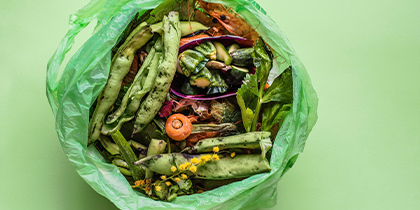
The goal is to manage chemicals and waste throughout their life cycle in an environmentally sound manner and reduce harmful emissions to air, water and soil. Waste streams and chemical waste should be handled safely to avoid harmful effects on humans and the environment. The European List of Waste (EURAL)helps with this: this classification ensures that waste is named in the same way in all EU countries. Thus, both producers and processors know exactly what type of waste is involved and which rules apply to storage, processing and reporting. Think of the waste register and mandatory sustainability reports such as the CSRD.
SDG 12.5 Reduce waste generation
By 2030, significantly reduce waste generation through prevention, reduction, recycling and reuse.

SDG 12.6 Reporting by companies
Organisations are encouraged to demonstrate their social and environmental impact through sustainability reporting, for example the CSRD (Corporate Sustainability Reporting Directive). In addition, governments encourage the demonstration of corporate responsibility. Companies can underpin their ESG performance with additional assessments or certifications, such as Ecovadis, the CSR Performance Ladder or B Corp certification.
SDG 12.7 Sustainable public procurement
Governments have a lot of influence on the market through their purchasing power. By including sustainable criteria in tenders - such as reusable materials, energy-efficient products and suppliers working in a circular way - they encourage innovation and accelerate the transition to a circular economy.
SDG 12.8 Awareness and access to knowledge
To enable sustainable development, people everywhere need access to clear information and knowledge about sustainable choices and lifestyles. Consider education on circular use of materials, responsible consumption and reducing waste.
12.a Support for developing countries
Developing countries get help to strengthen their scientific and technological knowledge. This allows them to make more sustainable choices in production and consumption. Think of access to circular technology, training and investments that help reduce waste and use raw materials more intelligently.
12.b Sustainable tourism
To make tourism more sustainable, measurement methods and reporting tools are being developed that provide insight into the impact on the environment, employment and local culture. With this data, destinations can better steer towards an economy that is both sustainable and socially responsible.
12.c Phase out fossil subsidies
Many countries encourage the use of fossil fuels, for example through tax rebates or pricing schemes for oil, coal and gas. SDG 12.c encourages countries to phase out these subsidies so that sustainable alternatives are given more space. The Netherlands, for example, is working on reducing tax breaks for fossil fuels and encouraging alternatives such as solar energy and heat pumps.
The SDGs and our mission
Milgro uses the SDGs as inspiration to realise a world free of waste. This translates to the following:
SDG 12 - Responsible consumption and production. By preventing waste and keeping raw materials in the chain, we make production and waste processes smarter and more efficient.
SDG 13 - Climate action. We help organisations measure, report and reduce their carbon emissions through circular waste management and insight into material flows.
SDG 14 - Living in water. By preventing the leakage of harmful substances into the water system, we protect oceans, seas and rivers.
SDG 15 - Living on land. With a circular approach, we reduce the use of new raw materials, protect ecosystems and prevent pollution
SDG 17- Partnership to achieve goals. We believe in collaboration within chains. Only together will we make the transition to a circular economy feasible and scalable.
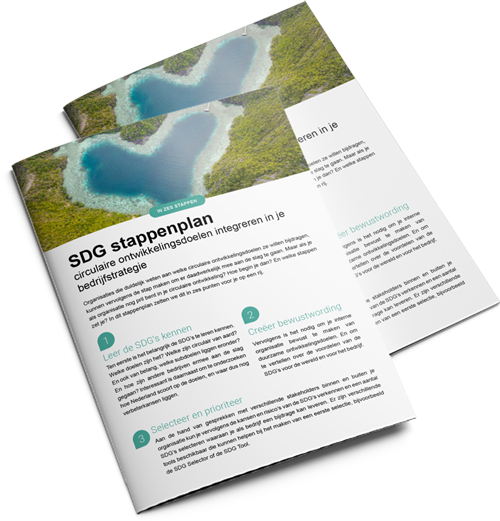
Get started with the SDG step-by-step plan
Would you like your organisation to make real progress with the SDGs? Our step-by-step plan guides you in linking sustainable objectives to tangible business outcomes. In six clear steps, you will discover how to anchor circular entrepreneurship in both your strategy and operations.

Stay informed
Follow us on LinkedIn. Here we share the latest news on regulations, circular topics and developments in the industry. You can also subscribe to our newsletter. Curious what Milgro can mean for your operations and waste processes? Feel free to get in touch.
.jpg?width=380&name=Uitgelichte%20afbeelding%20(52).jpg)