

Increasingly, you see sustainable alternatives to regular plastic packaging. Terms like compostable and biodegradable are widely used in this regard, and although they seem similar, they do not mean the same thing.
In short: everything that is compostable is biodegradable, but the reverse is not always true. That very difference is important if you really want to make sustainable choices.
Plastic packaging waste continues to grow, while governments and the EU want us to move towards a circular economy, a society in which waste becomes raw material. By 2050, Europe even wants to be fully circular. This is why more and more alternatives to regular plastic are popping up: from biodegradable cups to compostable packaging. But what is what?
Compostable packaging: what is it exactly?
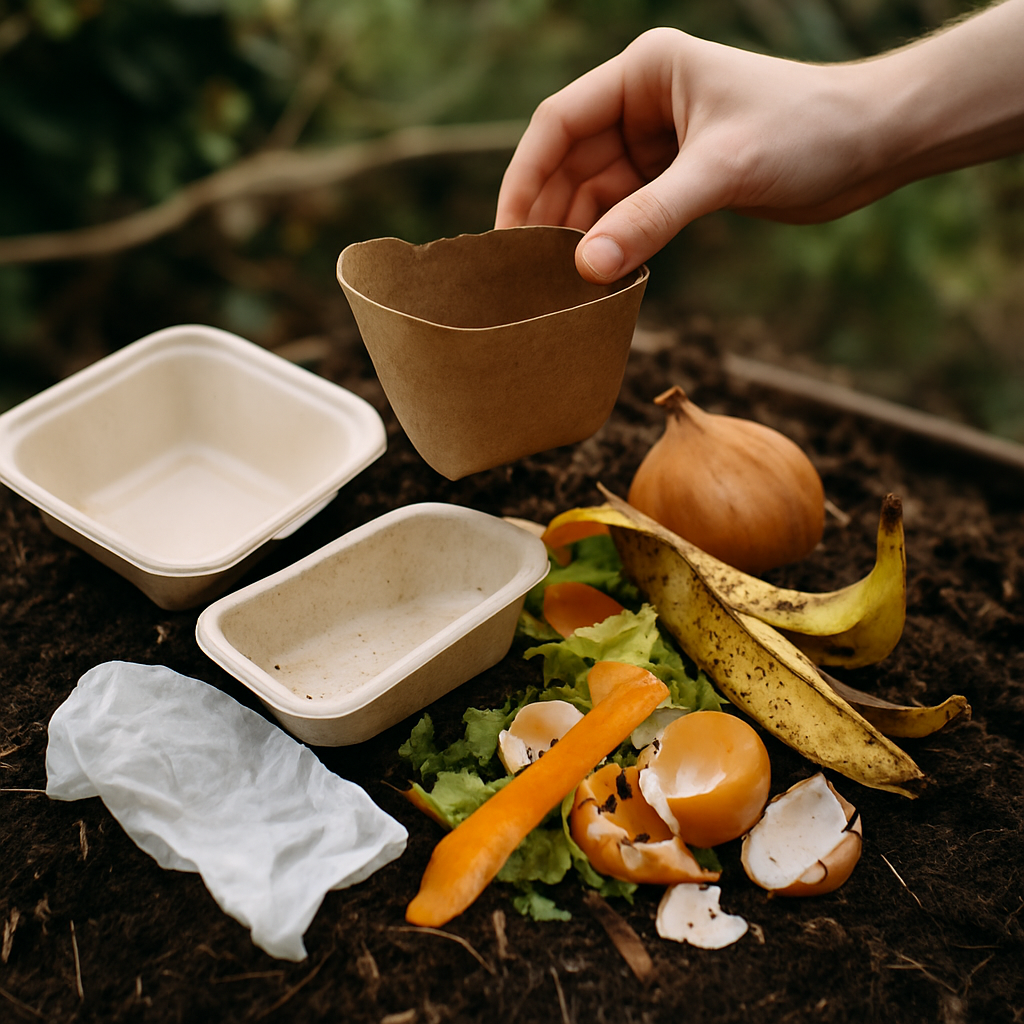
Compostable packaging has potential environmental benefits over regular plastics. Although these containers also fall under the term plastic, they are made of plant-based, natural materials that can be broken down in industrial composting facilities, where high temperatures, humidity and oxygen are carefully controlled. In nature (such as in the garden, forest or sea), this decomposition is much slower or sometimes not at all. These compostable containers can then break down into compost, water and carbon dioxide. These plastics leave no residue in the environment and are designed to eventually degrade completely within a set time frame.
When can something be called "compostable"?
The European standard, EN 13432, determines when a package is compostable these are the 4 main requirements that a compostable plastic must meet, for example:
- within 6 months at least 90% of the carbon in the packaging has been converted to CO2 by microorganisms (biodegradability);
- after 12 weeks, almost no residue larger than 2mm remains;
- the residue (the compost) must promote plant growth and be free of heavy metals or other toxic substances;
- every part of the material meets these requirements.
Only then may a package carry the label "compostable.
Please note that compostable plastic should not be thrown away with vegetable, fruit and garden (VGF) waste, nor should it be put in home compost. Industrially it can be broken down, but not yet at home. For the time being, compostable packaging is expected to be thrown away with the residual waste. Nor is compostable packaging welcome with plastic & beverage cartons (PD).
GFT is subject to even stricter requirements regarding compostability. There are labels for this, such as the Kiemplant logo or OK Compost logo. These are currently awarded mainly to certain GFT collection bags, so that they can be safely used in the GFT bin.

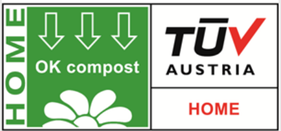
These additional requirements exist because although GFT waste is industrially composted, it is often not composted under the high temperatures and long times required to break down regular compostable packaging.
Therefore, for now, the rule is: compostable plastic belongs with residual waste.
What are the pros and cons of compostable plastic?
The term and lack of clarity surrounding compostable packaging creates a number of snags on this type of packaging such as;
- many people accidentally throw it in with the kitchen and garden waste or plastic waste (PD), which causes pollution in those streams;
- not all compostable packaging fits well with existing industrial processing methods.
Still, there are clear advantages that certainly outweigh the disadvantages:
- Clear process and specific requirements for the method of decomposition, a more sustainable end-of-life phase.
- The remains (the compost) serve as a soil nutrient.
- When reuse or recycling of regular plastics is not possible, replacement with compostable plastic of useful application so that the regular plastic waste stream shrinks.
- It constitutes a sustainable alternative to regular plastic because compostable plastic does not consist of fossil resources.
In short: compostable plastic is a step in the right direction, provided it is collected in the right way.
Biodegradable packaging: what is it exactly?
How biodegradable compares to compostable, for that there is a clear explanation: biodegradable is in fact the umbrella term that includes both compostable and non-compostable packaging, provided it is made from biological material.
At the same time, biodegradable means that the material may one daybe degraded by natural processes, only the time frame in which is not established.
Biological material is material derived directly from plants, bacteria, yeasts and sometimes algae this incidentally includes biobased material.
However, it is important to emphasize that the term biobased only says something about the origin of the material, i.e. that it comes from renewable, natural sources. And says nothing about the degree of biodegradability or compostability of the product.
The definition of biodegradability of packaging is a lot broader than that of compostable:
- No established standard for the degree and time of biodegradability of the biodegradable material. It can potentially take years to centuries, depending on conditions.
- Degradation products need not be of value to soil.
- Products that are biodegradable do not always decompose 100%, they can also fragment into small pieces without fully decomposing.
The term biodegradable may sound like a sustainable solution, but in reality it also has obvious drawbacks:
- Lack of clear guidelines for decomposition.
- Not compatible with current processing methods.
- Microplastics may remain when falling out of one into small pieces.
- Biodegradable sounds sustainable and is therefore an often seen form of greenwashing.
The advantage of biodegradable plastics, however, is that they are less harmful than regular plastic. Even if they are not compostable, they typically break down into smaller pieces and are therefore less harmful to humans and the environment. Also, no fossil resources were used for these plastics, which of course is the big advantage.
Conclusion: compostable plastic is generally better than biodegradable, but both are sustainable alternatives to regular plastic.
Compostable packaging is currently the most sustainable choice among alternatives to regular plastic. They meet strict European requirements and, when processed correctly, actually contribute to healthier soil. Those benefits are missing from the broader category of biodegradable materials, where degradation is less predictable and does not always occur completely.
This frequently leads to confusion in practice. For example, there are biodegradable but non-compostable bags that do not belong in the kitchen and garden waste bin. Only bags with a Kiemplant logo or OK Compost logo may be disposed of and then only if they actually contain GFT waste. Other compostable products, such as cutlery or crockery, still belong in the residual waste, as do all biodegradable packaging without a label.
So the best choice is to choose compostable packaging whenever possible and dispose of it properly. If that option is not available, then a biodegradable alternative is a good second choice.
Although the collection rules sometimes seem complicated, both options are a step in the right direction.They help reduce dependence on fossil resources and contribute to a circular future where we reduce plastic waste step by step.
Want to get started composting yourself? With or without a GFT bag including one of the two logos?
Listen to our webinar on composting here.
Staying informed
Stay up to date with all the new developments around the CSRD and the Omnibus Package? Follow us onLinkedIn, listen to the podcast "Feedstock to Think" or subscribe to the newsletter. Are you curious about what Milgro can do for your organization ? Then book a no-obligation introductory meeting.
Stay informed
Follow us on LinkedIn. Here we share the latest news on regulations, circular topics and developments in the industry. You can also subscribe to our newsletter. Curious what Milgro can mean for your operations and waste processes? Feel free to get in touch.
.jpg?width=380&name=Uitgelichte%20afbeelding%20(82).jpg)