




Raw materials are the invisible engine under our economy. They are in everything we make, build, transport and digitize. From batteries and solar panels to microchips and wind turbines, almost everything starts with raw materials. Yet we rarely stop to think about where they come from, how finite they are and what it means when they are suddenly no longer available as a matter of course. While the world is in the midst of a resource transition, from linear use to circular reuse, it is becoming clear that this transition can also have financial implications: increased pressure on resources often translates into higher costs for consumers.
What are raw materials?
Raw materials are natural resources used to produce goods and deliver essential services. They include metals such as iron, copper and aluminum; minerals like sand and limestone; fossil fuels such as oil and natural gas; and renewable biological materials including wood, cotton and rubber.
As primary raw materials, they form the foundation of nearly every production and value chain — from the smartphones we use daily to the wind turbines that generate renewable energy. Without secure access to these resources, modern manufacturing and infrastructure would not be possible.
Circular Resource Management: Preserving Raw Material Value
Our global economy is still largely built on a linear model: extract, use and dispose. As a result, only a small percentage of materials are reused, while more than 90% of raw materials exit the value chain after a single lifecycle. The circular economy offers a structural solution to this inefficiency. By keeping materials in circulation for as long as possible, preserving their economic value, and designing products for reuse, repair and high-quality recycling, organizations can significantly improve resource efficiency.
Closing the Circularity Gap reduces dependence on primary raw materials, mitigates supply chain risks and helps companies control rising material costs — ultimately reducing cost pressures for consumers.

Geopolitical tensions and the impact on raw materials
In addition to environmental and economic reasons, there is an increasingly clear geopolitical component to commodity demand. It is not just about how much of a commodity there is, but also about who controls extraction, refining and distribution. China, for example, dominates much of the global production and processing of rare earths and other critical materials. According to analyses by GeoModes and the International Energy Agency (IEA), this has a direct impact on security of supply and energy supply. Historically, China has already stopped rare earth exports once after a diplomatic conflict with Japan, which spooked markets worldwide. Events like this show how dependence on a limited number of producers is a real risk.
Europe is trying to reduce this dependence. Initiatives such as the Critical Raw Materials Act and ReSourceEU are working to increase domestic processing, diversify suppliers and invest in recycling. At the same time, recent figures from CBS show that Europe's dependence on critical materials such as magnesium and manganese is significant, making companies vulnerable to price increases and supply risks. This geopolitical reality shows that raw materials are not only an environmental or economic challenge, but also a strategic issue for international cooperation and competitiveness.
Critical raw materials and their impact on prices
Not all commodities are created equal. A specific group is classified as Critical Raw Materials (CRMs) — resources that are both economically vital and highly vulnerable to supply chain disruptions.
The European Commission currently maintains a list of 34 critical metals and minerals, including cobalt, lithium, manganese, magnesium, gallium and rare earth elements. These materials are indispensable for energy transition technologies such as batteries, solar panels, wind turbines and semiconductors.
Recent research indicates that nearly half of Dutch companies expect resource scarcity to drive higher costs for both products and services. Many anticipate passing part of these increases on to customers, meaning that material shortages and supply chain pressures are increasingly felt directly by end consumers.

From circular ambition to action: 7 ways to close the gap
Reducing pressure on raw materials requires more than recycling alone. It calls for strategic action: circular design, valorising waste streams, increasing supply chain transparency, and exploring alternative resource sources. By closing the Circularity Gap, companies can lower their dependence on primary raw materials, strengthen supply chain resilience and reduce exposure to volatile material prices — helping to keep products affordable for consumers.
In From Circular Ambition to Action: 7 Ways to Close the Gap you’ll find practical tools and actionable strategies to tackle resource scarcity today while building cost-effective, future-proof solutions.
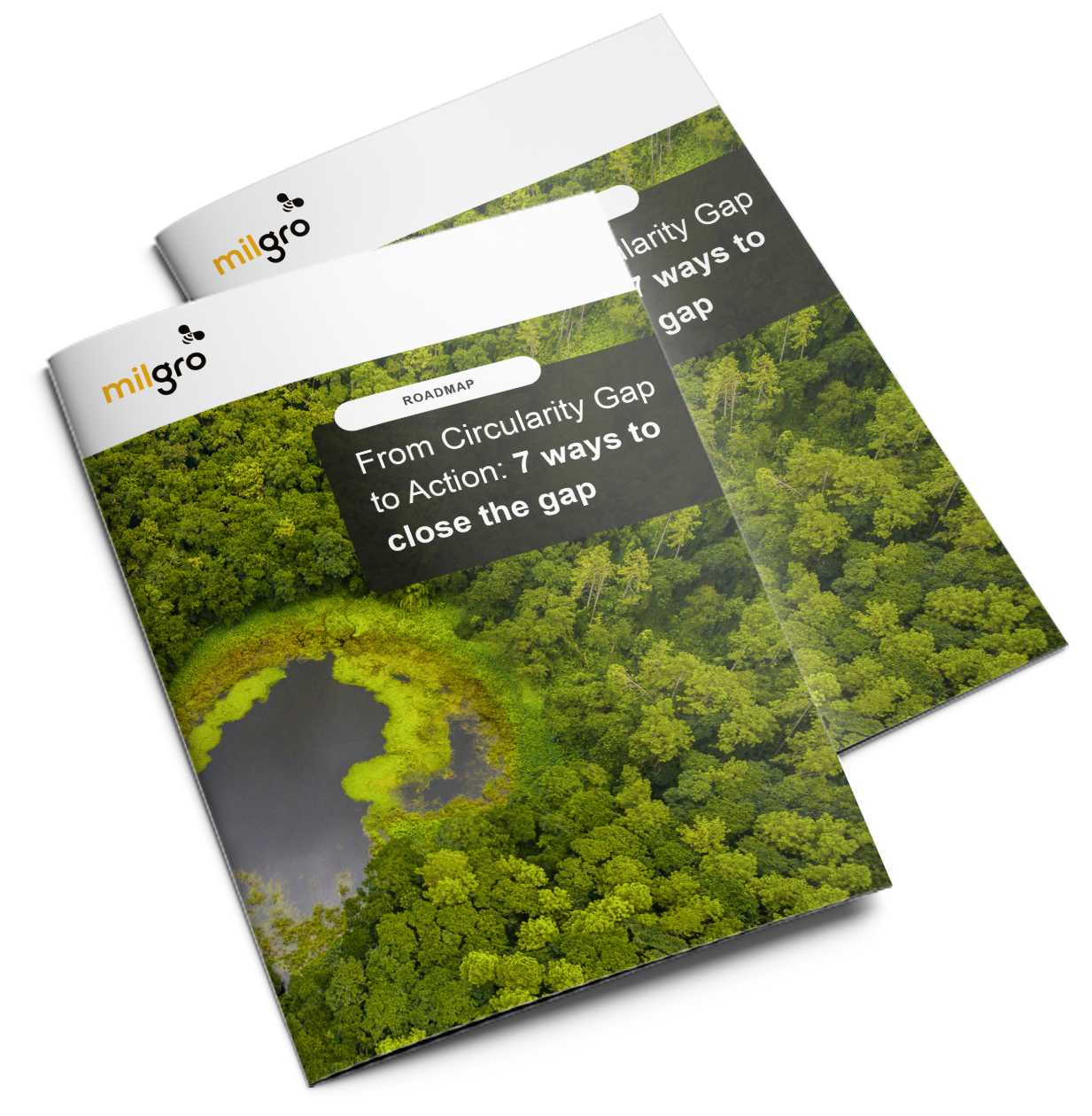
Download the Free Step-by-Step Guide to Get Started

Stay informed
Follow us on LinkedIn. Here we share the latest news on regulations, circular topics and developments in the industry. You can also subscribe to our newsletter. Curious what Milgro can mean for your operations and waste processes? Feel free to get in touch.
.jpg?width=380&name=Uitgelichte%20afbeelding%20(97).jpg)
.jpg?width=380&name=Uitgelichte%20afbeelding%20(52).jpg)