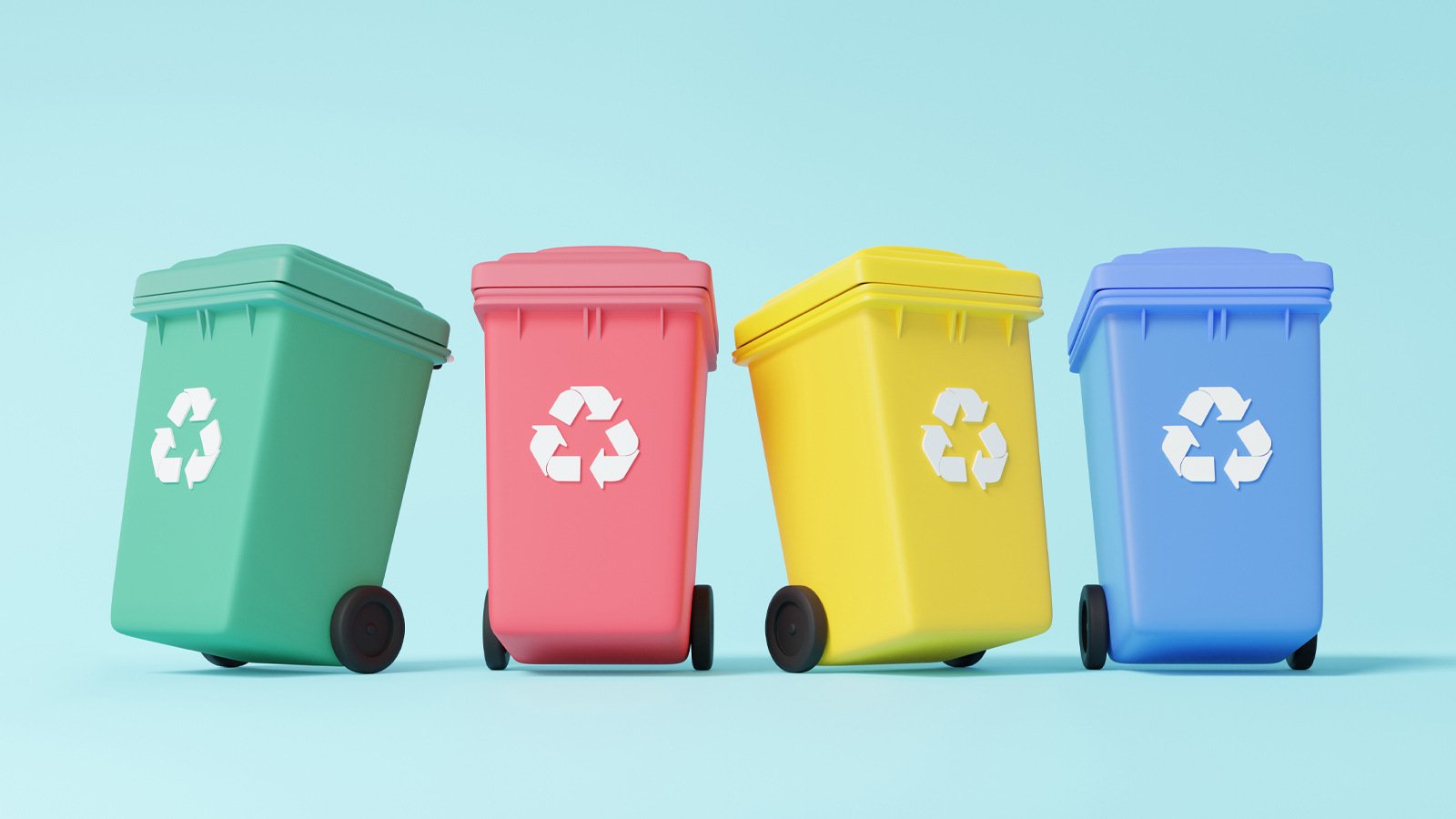




Recycling sounds simple: you toss something in the right bin and assume it automatically gets reused. In reality, recycling is far more than that. It is a starting point in the circular economy, an important step, but one that sits near the bottom of the R-ladder, a model that shows which strategies have the greatest positive impact on the environment.
The R-ladder shows that the highest impact comes from refuse (avoiding products altogether), reduce (consuming less), followed by reuse and repair. Only then comes recycle: processing waste into new raw materials. Recycling is therefore essential, but always best combined with reuse and reduction.
In 2026, recycling is also firmly embedded in legislation and policy. The European Union has introduced binding targets and end-of-waste criteria for plastics, while the Netherlands has set ambitious national goals: 80% recycling by 2030 and an even higher share of high-quality recycling by 2035.
What is recycling?
Recycling is the process by which waste materials are converted into new raw materials or products. It helps recover valuable materials, saves energy, and reduces the amount of waste that would otherwise go to incineration or landfill. It is the first concrete step we can take toward a circular economy, for those moments when reuse or repair is no longer an option.
What is the R-ladder and why does recycling sit near the bottom?
The R-ladder shows how we can make the most circular use of materials. At the top are refuse (avoiding products) and reduce (consuming less), followed by reuse and repair. Only then comes recycle: processing waste into new raw materials. This highlights that recycling is important, but not the ultimate solution. It is a starting point that should always be combined with reuse and reduction.
Read also
Why recycling is not truly circular
Legislation and targets around recycling in 2026
In 2026, recycling is firmly anchored in regulation, both at European and national level.
European Union
- End-of-waste criteria for plastics make it easier to use recycled material in new products.
- Binding recycled content targets for packaging and vehicles encourage the use of recyclate.
- Strict design and labelling rules promote reuse, collection, and product lifespan, not just end-of-life processing.
The Netherlands
- By 2030, at least 80% of waste must be recycled, with at least 11% being high-quality recycling.
- By 2035, this rises to 82% recycling, with at least 15% high-quality recycling.
- The use of primary raw materials must decrease, while secondary materials take on a larger role.
These targets make clear that recycling is no longer just a "nice initiative". It is a mandatory component of circular strategies.
The advantages of recycling
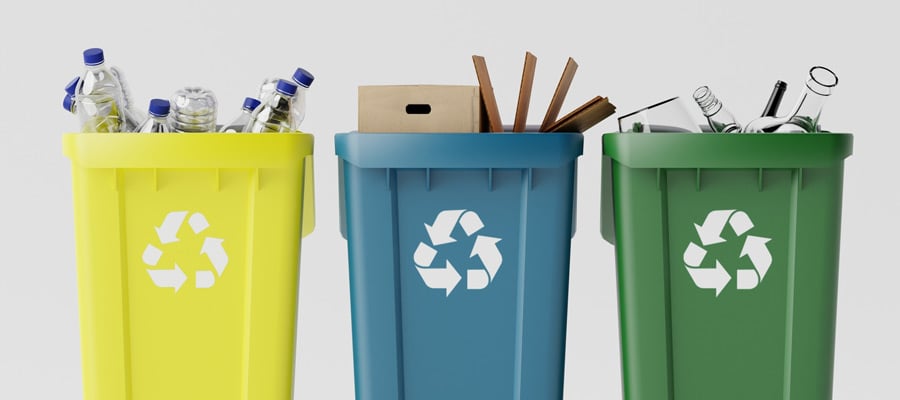
Recycling delivers significant benefits, both ecologically and economically.
Saving raw materials: materials such as aluminium, glass, and paper do not need to be fully extracted from scratch. Aluminium can be recycled indefinitely, while paper recycling reduces logging and protects forests.
Energy savings: recycling typically requires less energy than producing from new. Aluminium saves up to 95% of energy, glass and steel save 20-30% and 60-70% respectively. This translates directly into lower CO₂ emissions.
Waste reduction: recycling reduces the amount of waste sent to incineration or landfill. In the Netherlands, around 2.3 million tonnes of household and commercial waste is recycled each year.
Economic opportunities: recycling creates jobs in collection, sorting, processing, and product development, and drives innovation in circular products.
Supporting sustainable production: companies that use recyclate in packaging, construction materials, or electronics can significantly reduce their carbon footprint.
The disadvantages and challenges of recycling
Recycling also has clear limitations.
Downcycling: not all recycled materials retain their original quality. Recycled plastic, for example, is often used for lower-grade products such as pallets or bin bags.
Limited use of recyclate: even with well-sorted materials, many companies still opt for virgin material due to quality standards or price differences.
Cost and energy: collecting, transporting, sorting, and processing waste requires energy and money. This can offset a significant portion of the potential environmental benefit.
Dependent on consumer behaviour: poor separation or contamination can render entire batches unusable.
Not all materials are suitable: some plastics, electronic waste, and composite materials are difficult or economically inefficient to recycle.
Recycling is powerful, but works best as part of a broader strategy that also includes reducing, reusing, and repairing.
Practical examples
Glass: can be recycled indefinitely without loss of quality.
Aluminium: highly energy-efficient to recycle.
Plastic: less than half of plastic packaging is effectively recycled.
For businesses, this means recycling only makes full sense when combined with circular design and reuse.
Milgro's vision on recycling
At Milgro, we see recycling not as a goal, but as a means within circular solutions. Using our data-driven approach and LCA analysis of waste streams, we determine for each material what is truly sustainable: recycling, reuse, or an alternative higher up the R-ladder.
Our analyses consistently show that avoiding virgin raw materials almost always produces a positive ecological result. At the same time, the environmental footprint varies significantly between processing methods and recycling companies. By putting these facts at the centre, we help businesses and organisations make well-informed choices that genuinely contribute to a circular economy.
FAQ – Frequently asked questions about recycling
What can I do to recycle better? Improve waste separation, choose products that can be recycled, and encourage reuse wherever possible.
Is recycling always environmentally friendly? Not always. Downcycling, energy use, and costs are all factors that can limit the environmental benefit.
Why does recycling sit near the bottom of the R-ladder? Because reuse, reduction, and repair have a greater impact on sustainability than recycling alone.
What are the recycling targets in the Netherlands? The Netherlands aims to recycle at least 80% of waste by 2030, rising to 82% by 2035, with a growing share of high-quality recycling.
What is the difference between recycling and upcycling? Recycling converts waste into new raw materials, which may be of lower quality (downcycling). Upcycling turns waste into a product of equal or higher value, making it preferable where possible.
Want to know more?
Want to know more about which solution is best for your waste streams? And what this means for your CO2 impact? Conduct a FREE wastescan with us!

Stay informed
Follow us on LinkedIn. Here we share the latest news on regulations, circular topics and developments in the industry. You can also subscribe to our newsletter. Curious what Milgro can mean for your operations and waste processes? Feel free to get in touch.
.jpg?width=380&name=Uitgelichte%20afbeelding%20(82).jpg)
.jpg?width=380&name=Uitgelichte%20afbeelding%20(80).jpg)