

.jpg?upscale=true&width=1600&name=Headers%20(29).jpg)
.jpg?upscale=true&width=768&name=Headers%20(29).jpg)
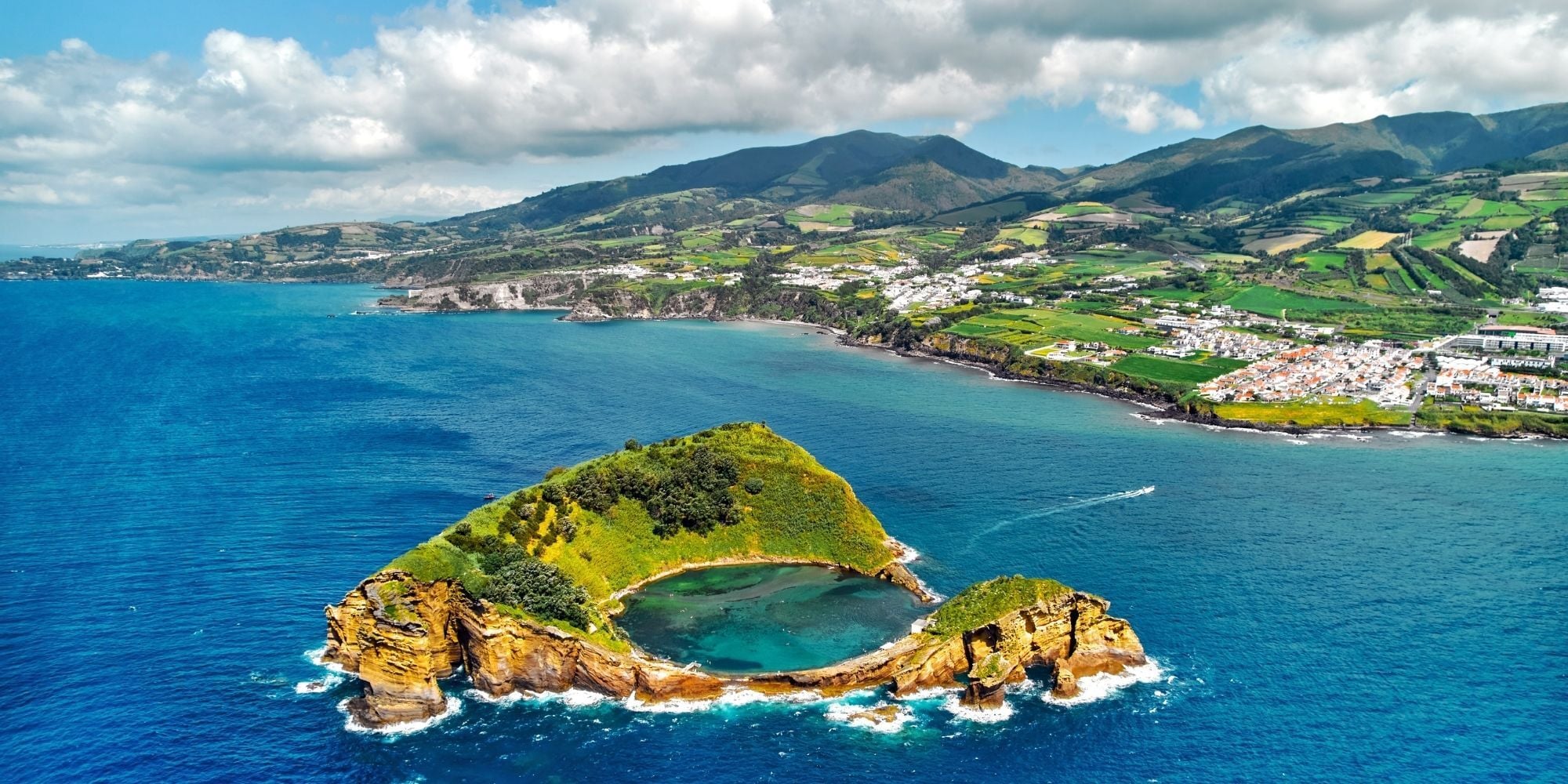
The Azores are located in the middle of the Atlantic Ocean, 1,300 to 1,500 kilometers west of mainland Portugal. Nine volcanic islands, far from everything. And yet: the Azores recycle 55.1% of their waste, more than the average on the Portuguese mainland, where 30.2% of waste is recycled. And compared to the Portuguese island of Madeira (12.8%), the Azores stand out even more. Waste Engineer Riske van Vliet spent ten days in the Azores and returned with a surprising insight. “An archipelago where they are remarkably focused on waste management.”
How do the Azores manage their waste?
The Azores are one of the most remote inhabited places in Europe. The islands rely heavily on shipping and air travel for transportation and goods. During storms or thick fog, the smaller islands can sometimes be cut off from the outside world for days.
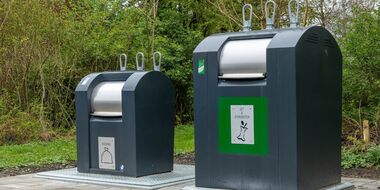
This poses a challenge, though that doesn’t seem to be the case when it comes to waste. Collection is handled through a combination of public recycling stations (recycling centers), door-to-door pickup services, and special drop-off points. In the cities, you’ll find “ecopontos”: neighborhood containers where residents bring their sorted waste themselves. In larger municipalities such as Ponta Delgada (located on the island of São Miguel) and Angra do Heroísmo (located on the island of Terceira), residual waste and organic waste are collected from homes on set days. Local residents have free access to recycling centers (ecocentros) for bulky items, electronics, batteries, and construction waste. These recycling centers are located throughout the nine islands.
Since April 10, 2026, a deposit-return system has been introduced in the Azores and mainland Portugal. Residents were already sorting their plastic bottles and cans into the colored neighborhood recycling bins, but received nothing in return. Now they do—look for the VOLTA symbol. A transition period is in effect until August 9, 2026, during which old packaging without the logo will be phased out of stores.Starting August 9, 2026, all packaging must bear the logo.
Is nature in the Azores free of trash?
“There wasn’t any trash on the streets,” Riske said. “People live in the middle of nature, far from the mainland. I think that’s why they take much better care of the islands.” In addition, the Azores are home to some truly creative people. Works of art are regularly created from the litter that washes ashore from the sea. Riske happened to walk past one by chance. It’s most likely not the only work of art on the island.
.jpg?width=404&height=404&name=LinkedIn%20template%20(50).jpg)
How do residents of the Azores sort their trash?
Waste can be sorted island-wide using four colored bins: yellow for plastic packaging and.jpg?width=240&height=240&name=LinkedIn%20template%20(51).jpg)
cans, blue for paper and clean cardboard packaging, green for glass, and gray for general waste. You’ll find these bins everywhere, even along the hiking trails—one of the main reasons tourists travel to this Portuguese archipelago.
In addition to the color, each recycling bin also features a symbol representing the island, along with the name of the waste stream—in both Portuguese and English. So there’s no direct labeling indicating the specific waste streams. Still, Riske observed that waste generally ended up in the correct bin. An interesting finding: it shows that color recognition alone can bring about a behavioral change regarding waste separation in the Azores.
What happens to the waste afterward?
The waste is in the correct bin, but does it have to be shipped to mainland Portugal for processing? No, the vast majority of it is processed on the island itself. Each island has its own sorting centers, where separated waste is compacted and packaged by local operators such as MUSAMI on São Miguel, and Resiaçores on Terceira and the smaller islands. For residual waste, the Azores have their own incineration plant on Terceira. Smaller islands such as Faial and São Jorge compress their residual waste into compact bales, which are transported by ship to Terceira. The Azores achieved a regional recycling rate of 55%, while the national average in Portugal was 30.2%.
What can we—and mainland Portugal—learn from the Azores?
The Azores are aware of the impact of waste on nature. This was also evident during a boat trip from Riske to one of the islands. “During the crossing from island to island, the skipper would stop whenever he saw waste floating in the sea. He would then fish it out of the water—something you normally just see boats sail right past.” Riske told the captain about her work at Milgro as a Waste Engineer, where she helps clients manage their waste and raw material streams in a smarter and more sustainable way. The captain responded enthusiastically and noted that awareness of waste and its impact is very important. In this regard, the Azores serve as a model for mainland Portugal and Madeira, demonstrating that even isolated places in the world can tackle waste management.
.jpg?width=2000&height=1000&name=Uitgelichte%20afbeelding%20(27).jpg)
Read also
A view of waste from Portuguese cities
Stay informed
Follow us on LinkedIn. Here we share the latest news on regulations, circular topics and developments in the industry. You can also subscribe to our newsletter. Curious what Milgro can mean for your operations and waste processes? Feel free to get in touch.