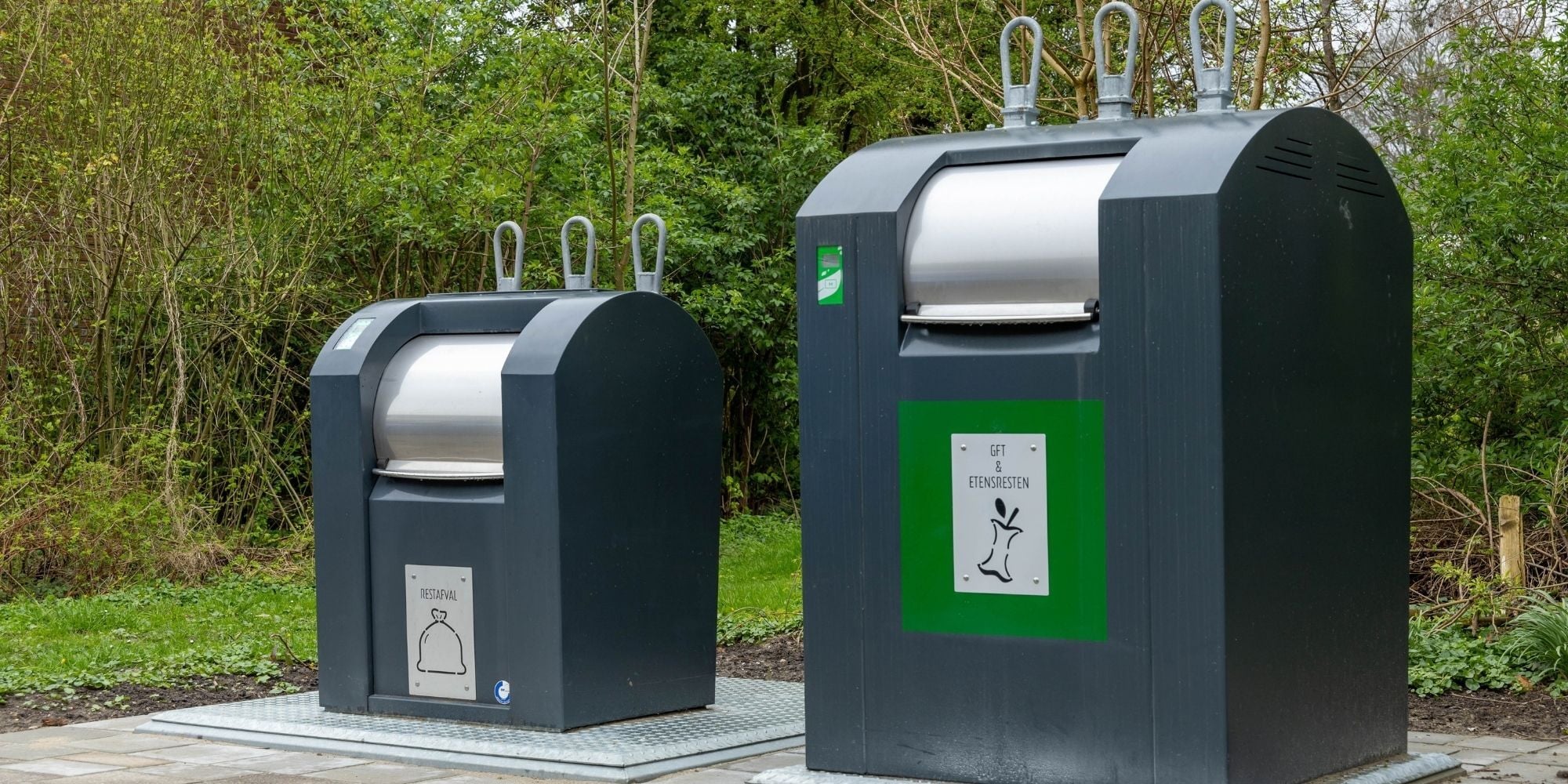


Imagine you live and work in Amsterdam. At home, you can throw plastic packaging in the general waste. At work, it has to go in a separate PMD bin. Going to visit a friend in Ouder-Amstel? It’s different all over again. This example isn’t unique. These kinds of differences in collection practices occur in almost every municipality—and between home and the workplace as well. Why is that? Wouldn’t it be much easier if the collection system were the same everywhere?
Two Types of Collection
Why do these collection methods differ between municipalities? Quite simply: because they’re allowed to decide for themselves. That’s stipulated in the Environmental Management Act. Broadly speaking, municipalities choose between two types of collection methods: source separation and post-separation. In the first case, the emphasis on proper separation lies with the resident; in the second, it lies with the waste processor, where waste sorting facilities separate the different types of waste. In relatively larger municipalities, post-separation is the preferred method, allowing plastic, metal, and beverage cartons to be disposed of with the residual waste. In smaller municipalities, this stream is collected separately.
Large Cities versus Villages
The differences between municipalities can be explained as follows. Large municipalities are densely populated, and residents live in smaller homes than in villages. They simply do not have room indoors for four different trash cans. Even outside on the sidewalk, there is often no space for separate wheeled bins per household. Because it is difficult to keep waste separated “upstream” (at residents’ homes), large cities often choose to separate waste “downstream” (later, at the processing plant).
The Netherlands versus Belgium
And what about Belgium and other countries in Europe? The Netherlands has a wide variety of collection methods, because municipalities determine not only what they collect separately but also how they do so. In Belgium, this is determined on a regional basis. France, in turn, has national rules regarding what must be separated, but individual municipalities determine the exact details. In both France and Belgium, the emphasis is on source separation. In the Netherlands, this is combined with post-separation. This approach has developed historically. For example, France has had a law in place since 1975 that holds producers responsible for the waste they generate. It’s no wonder the French are so eager to sort their waste properly. Incidentally, the system of pictograms has become so complicated from one local community to another that the French government recently decided to simplify it.
Every business is different
Then there are the differences between commercial and household waste. How did that come about? In the Netherlands, municipalities choose their own collection methods. And individual businesses, in turn, do the same. That makes sense: the business pays for the collection itself and naturally wants to do so as cost-effectively as possible. Furthermore, waste streams vary greatly depending on the type of business, which means a one-size-fits-all system would be counterproductive for the business community. A restaurant might generate a lot of organic waste, while a printing company disposes of a lot of paper and cardboard. A customized approach is therefore best.
The desire is understandable, but...
From the consumer’s perspective, a uniform system may be nothing more than a logical desire. At present, differentiated collection is still working too well to completely overhaul it. Moreover, the historical context largely explains why waste collection varies so much in the Netherlands: local chains are fully tailored to the way waste is processed in a specific area. Think of the underground containers, the waste processing facilities, and the suppliers involved in collection and processing. It is possible, but it is not necessarily the best or most efficient solution—let alone at the European level.
Toward Uniformity
Is there anything we can do? Absolutely. At least two things. For one, we could work toward using the same icons and colors for waste bins throughout the Netherlands. While the government does provide these, they aren’t mandatory and therefore haven’t been implemented everywhere yet. Uniformity in icons makes a difference. For example, what would happen if every city were allowed to design its own traffic signs? Exactly.
In addition, the definitions of the various waste streams are sometimes still vague. Consider the streams of vegetable, fruit, and garden waste (GFT) and vegetable, fruit, and food scraps (GFE). The former allows for large shrubs, while the latter includes broccoli stalks. The greatest confusion surrounds the PMD waste stream: plastic packaging, metal packaging, and beverage cartons. Another term is PBD: plastic, cans, and beverage cartons. Does that empty bag of chips belong in this category? Research shows that 68% of respondents think it does. 28% choose “residual waste”—which, in this case, is the wrong answer. There is room for improvement in this area as well. And it becomes much clearer to, among others, that Amsterdam resident who works at the university and has a friend in Ouder-Amstel—and to many others.
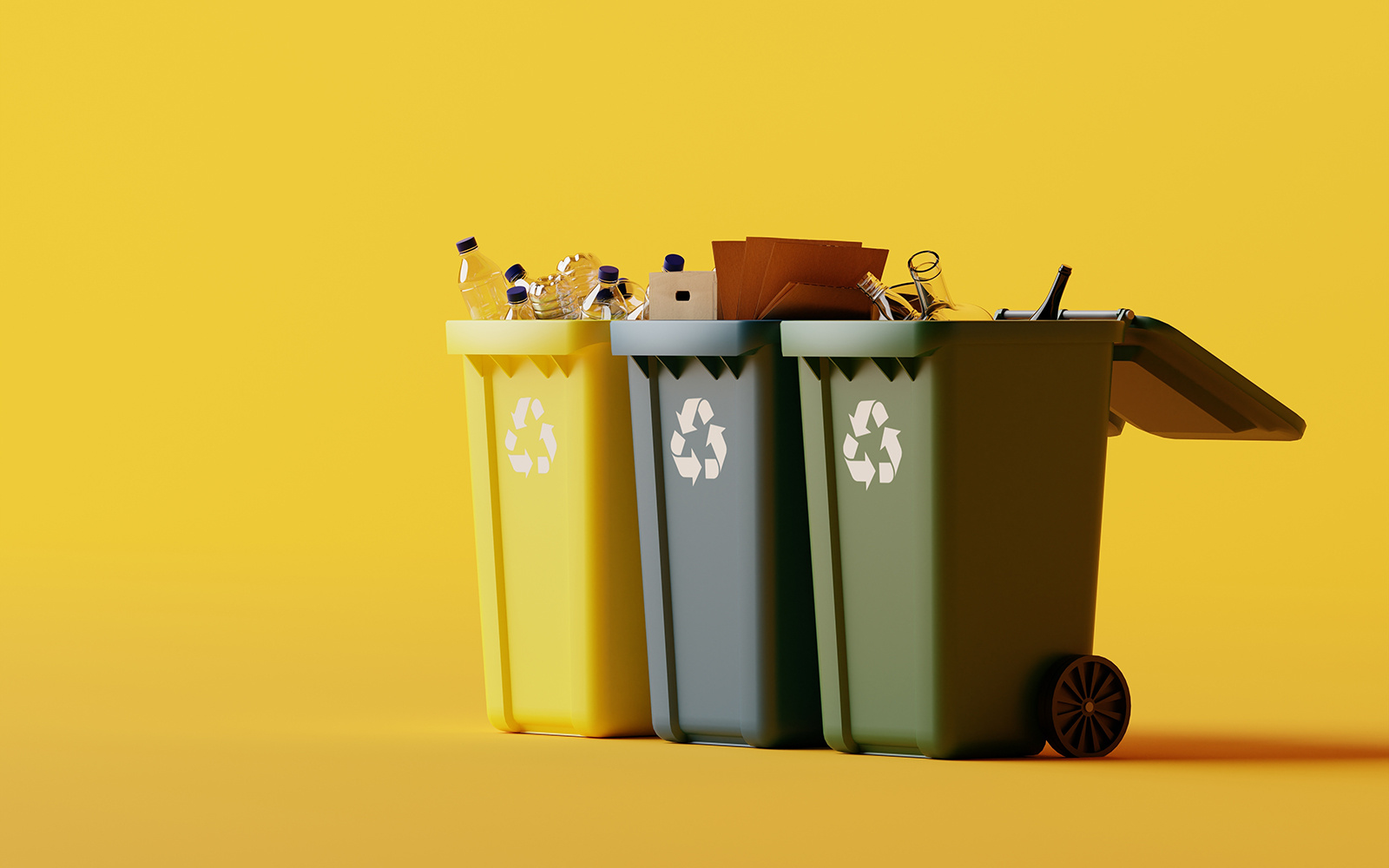
Source separation or post-separation: which is better for the circular economy?
Municipalities choose their own approach, but which method recovers the most valuable raw materials? In this blog, we compare source separation and post-separation.

Stay informed
Follow us on LinkedIn. Here we share the latest news on regulations, circular topics and developments in the industry. You can also subscribe to our newsletter. Curious what Milgro can mean for your operations and waste processes? Feel free to get in touch.
.jpg?width=380&name=Uitgelichte%20afbeelding%20(97).jpg)