


.jpg?upscale=true&width=1600&name=Headers%20(67).jpg)
.jpg?upscale=true&width=768&name=Headers%20(67).jpg)
Waste at your business location doesn’t always end up in the right bin. In practice, employees often find it difficult to determine which waste stream belongs in which bin. This is especially challenging for new employees, since they aren’t yet familiar with the specific waste streams at your business location. The result: waste ends up in the wrong bin.
Sound familiar?
Then this blog is for you. Because how do you ensure that employees—both those who’ve been there a while and new hires—do know how to sort waste streams correctly?
Straps: small items, wrong bin
Take straps, for example: the plastic strapping used to secure pallets and boxes. They are generated
on the work floor when goods are unpacked. At one of our partners in the logistics sector, straps were regularly thrown into the packaging waste, mixed in with plastic wrap. Both materials are thin and flexible, making it difficult for sorting machines to distinguish between them. The result: the straps still ended up in the residual waste. That’s a shame, because this can be prevented with the right sorting instructions.
How to Help Employees Find the Right Bin
Proper waste separation behavior can be encouraged with the right separation instructions, according to research by Milgro. This is due to two factors. First, it’s wise to involve your employees in the process. Because as long as employees don’t know what to sort and what to look out for, they won’t practice proper waste sorting. In some sectors, you deal with more specific waste streams that aren’t immediately obvious. Take the example of straps. By discussing the waste streams in advance and identifying the correct waste bin, you guide them through the process.
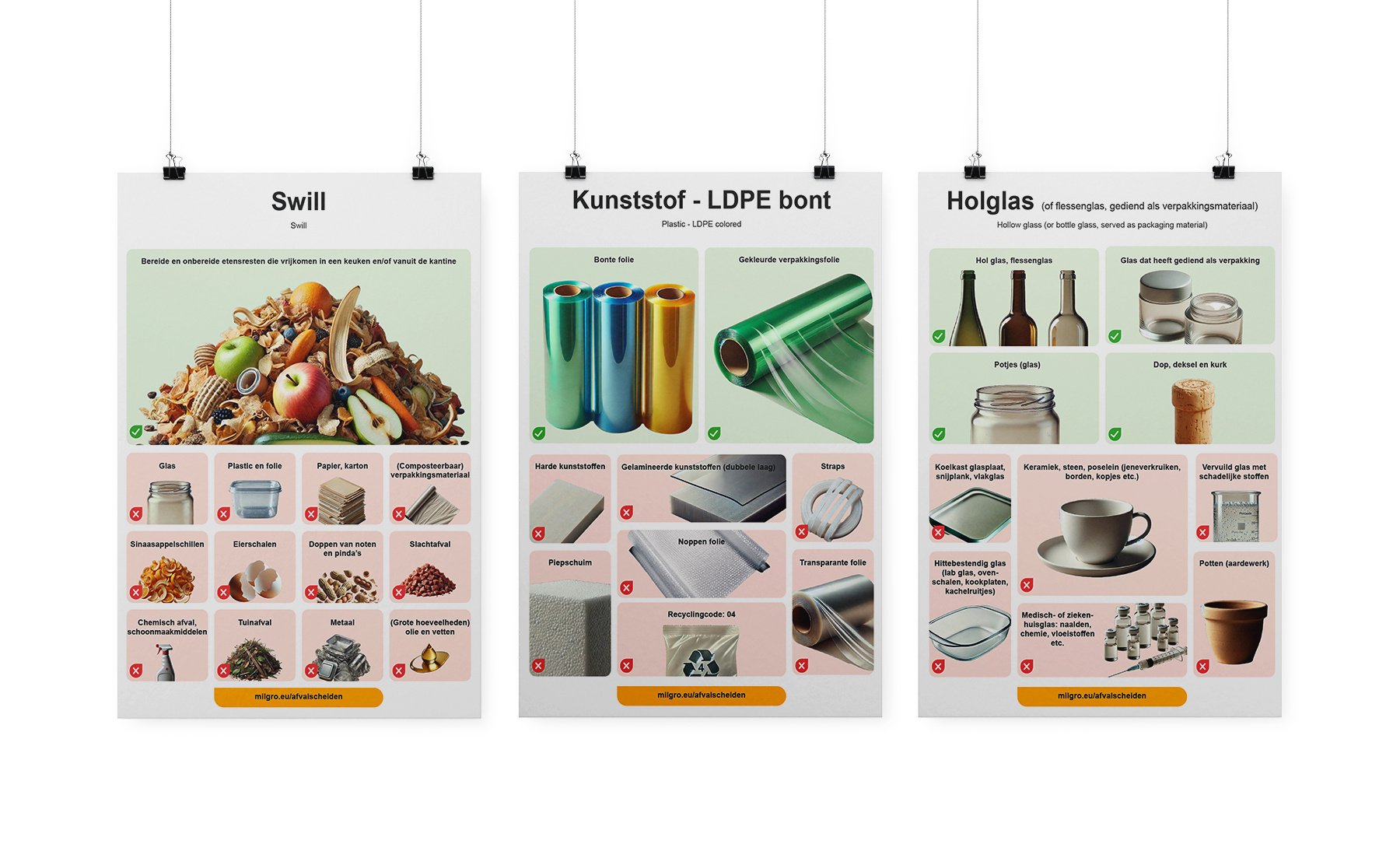
It’s also important to make the waste separation options visible and place them directly on the waste bins. This way, it’s clear at a glance where each waste stream belongs. Not every waste stream is the same. That’s why our free posters are divided into four categories:
-
Basic: cans, electronics, paper, glass, recyclables (PMD), general waste, swill, and textiles
-
Bulky waste: wood , metal, flat glass, construction and demolition waste, and rubble and soil
-
Plastics: EPS, LDPE, PET, PP, and Styrofoam
- Hazardous waste: used oil, batteries, glue, sealant, resin, solvents, fluorescent tubes, and paint
The posters feature not only a title but also images, making the overview very visual. This is also helpful when new colleagues join the team: they immediately know where to dispose of their waste in the correct bin.
Taking it a step further: is the bin actually in the right spot?
Let’s go back to the straps for a moment: have you ever thought about whether the waste bin is actually in the right spot—right where the waste is generated? That not only makes sorting easier but also more efficient. Though we understand that it’s not always easy to figure this out on your own.
One of our partners in the logistics sector gained this insight during a Zero Waste Workshop. Such a workshop begins with a short presentation on the waste stream: how large it is and what combination of materials it contains. Then, together with your employees—wearing gloves—we dive into the waste bin. This approach works well; employees who observe the process firsthand also learn to sort more effectively. Inside the waste bin, we analyze the waste streams and look for a targeted solution—in this case, for the straps.
Separate plastic bags have been provided for the straps, ensuring this waste stream is separated right at the source. The bags are placed in a logical spot on the business premises, exactly where the waste stream is generated. The plastic bags are then sent to a processor that specializes in recycling this type of plastic. Because the straps remain so clean and unmixed, they can be recycled into high-quality products, and this specific waste stream is also preserved as a raw material.
Read also
WasteLab at Bru Textiles (BE)
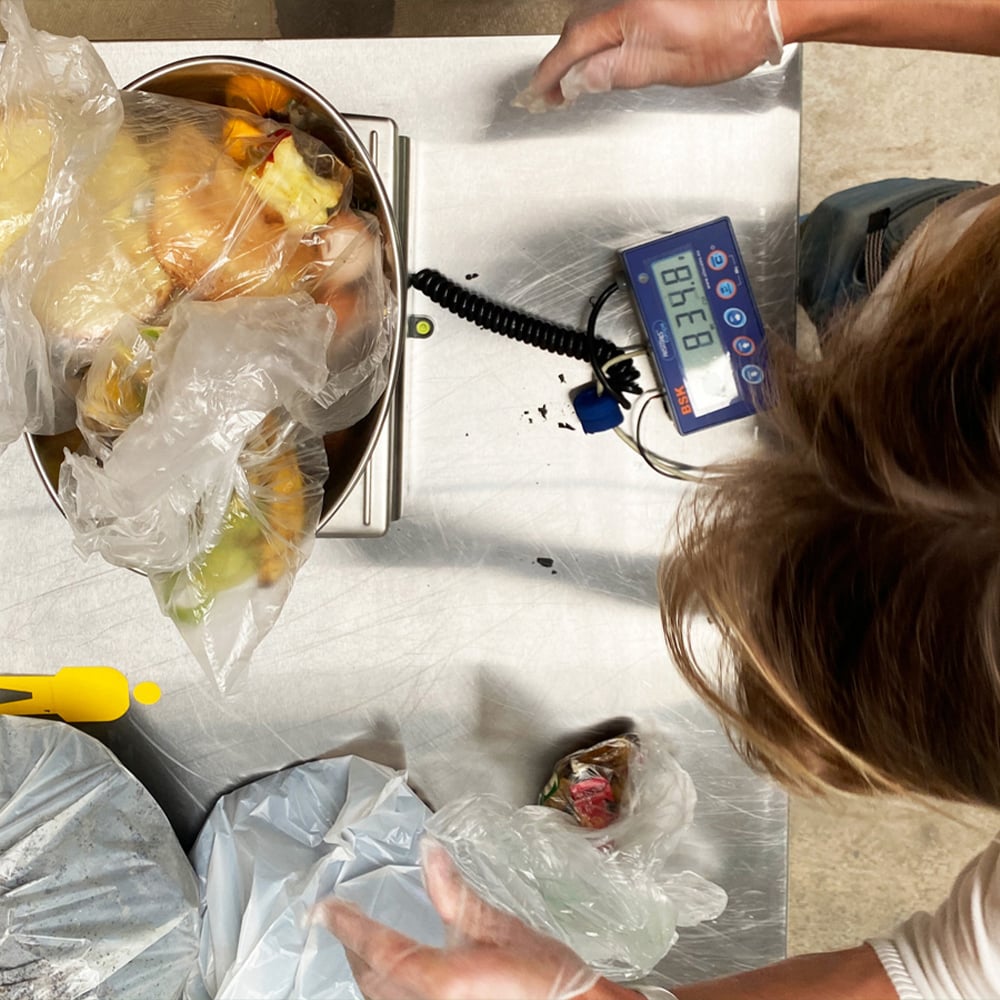
Would you also like to involve your employees in waste separation? You can do that with a Zero Waste Workshop.


Stay informed
Follow us on LinkedIn. Here we share the latest news on regulations, circular topics and developments in the industry. You can also subscribe to our newsletter. Curious what Milgro can mean for your operations and waste processes? Feel free to get in touch.
.jpg)