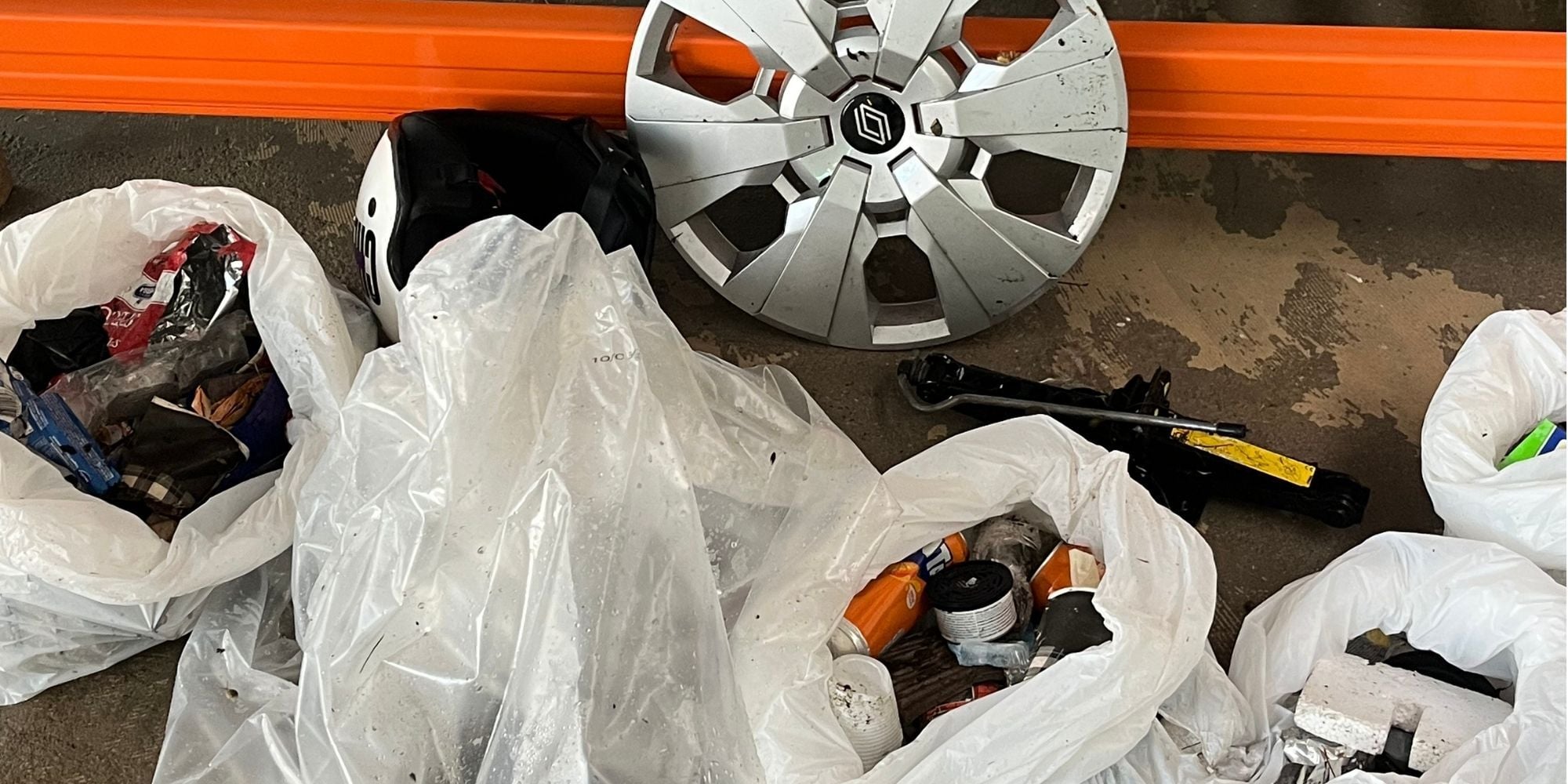


30 minutes of cleanup, 5 trash bags full.
In honor of World Cleanup Day, our colleagues rolled up their sleeves. We work every day toward a world free of waste by connecting companies that generate waste with companies that process it or recover raw materials from it. Last week, we went the extra mile: gloves on, trash bag and litter picker in hand.
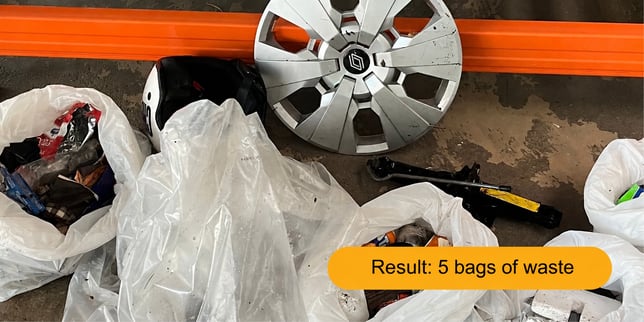
Within half an hour, we filled 5 trash bags. Among the items were a hubcap, a jack, and a scooter helmet. But the bags were mostly filled with single-use plastic. But the question arises: how do we prevent trash from ending up on the streets in the first place? And how do we ensure that a cleanup like this one will hopefully no longer be necessary next year?
World Cleanup Day is the largest annual global cleanup campaign, in which millions of people in more than 190 countries come together to pick up litter from streets, forests, parks, and beaches. The goal? To raise awareness about the major global problem of litter and the plastic soup.
What can we learn from Japan when it comes to litter?
How can we ensure that a cleanup campaign like this won’t be necessary next year?
It starts by looking at a place where such a cleanup wasn’t necessary this year: Japan.
From the moment you set foot on Japanese soil, it’s immediately obvious: there are hardly any trash cans on the streets. And yet, it’s clean, and you won’t find any litter. This is partly due to the power of culture. Cleanliness is seen as an expression of respect: for others, for the environment, and for yourself. You don’t leave trash behind in someone else’s space. And if you do make a mess, you take it with you.
That’s why you ’ll hardly find any public trash cans in Japan . Not even at busy stations or on crowded streets. People take their trash home with them. In addition, they have strict household waste separation; municipalities provide each neighborhood with a schedule and an information booklet that specifies exactly which types of waste are collected on which days and how they should be prepared for the waste management companies. Anyone who doesn’t follow the rules can expect hefty fines, which can reach up to about 200 euros. This keeps people highly motivated to sort their waste properly.
In the Netherlands or Belgium, a similar system would likely lead to problems very quickly. This is evident from the “haul” collected during the cleanup campaign.
Why is awareness essential for reducing litter?
In the Netherlands and Belgium, there is no shortage of resources. There are plenty of trash cans, recycling centers, and deposit-refund systems. Yet litter still ends up on the streets, in the water, and ultimately in nature. The problem, therefore, isn’t a lack of facilities, but behavior. And that behavior will only change structurally once the impact is brought to light.
Every year, approximately 11 million metric tons of plastic end up in the ocean worldwide. That’s equivalent to a full truckload every minute, 365 days a year. This has consequences for the entire ecosystem. For example, plastic damages coral reefs: a vital link in the marine ecosystem. Reefs provide habitat for a quarter of all marine mammals, protect coastal areas from erosion and currents, and store CO2 just like trees on land.
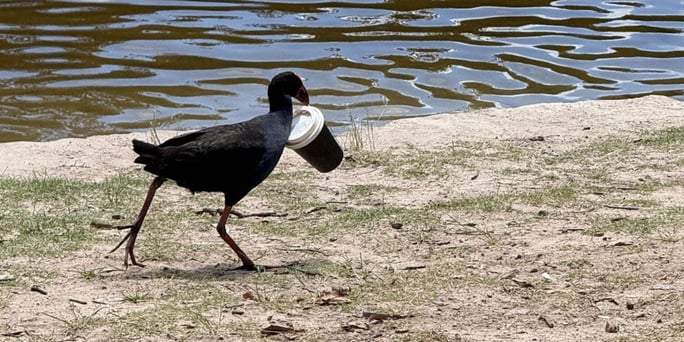
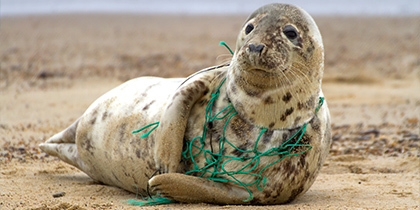
In addition, the animal rescue service regularly reports incidents involving animals that become entangled in plastic. For example, a cat was freed from a plastic net, and roe deer were spotted entangled in trash, resulting in their deaths. Smaller animals, such as birds, are also at risk: for example, a heron was found with a plastic cup stuck in its throat.
What laws and regulations address litter?
The impact is clear, and laws and regulations are responding to it. For example, the European SUP ( Single-Use Plastics) Directive bans the sale of certain single-use plastic products, such as cutlery and straws, and restricts the use of single-use plastic cups and containers in the food service industry and at events. In addition, the Extended Producer Responsibility (EPR) system holds manufacturers and importers accountable for the waste management of their packaging: they contribute financially to collection and recycling once the product becomes waste.
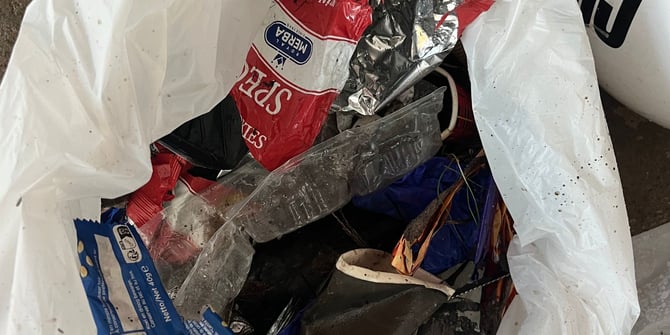
But despite these laws and regulations, during our own cleanup campaign we found mostly single-use plastics. Examples include coffee cups, beverage containers, candy wrappers, etc. The photo below provides a better view of the contents of the trash bags.
The UPV is merely a stopgap measure: it addresses only the consequences of the problem by requiring UPV producers to contribute to the costs of collection and recycling. The SUP Directive tackles the root of the problem by banning the sale of certain single-use plastic products. An ideal scenario would be for single-use plastic packaging to cease to exist altogether—or, in this case perhaps even sooner, for people to stop littering on the streets.
How can we ensure that a cleanup campaign won’t be necessary next year?
Point 1: That depends on two factors: awareness and behavioral change. In the Netherlands, municipalities can issue a fine of up to €170 for littering. In Belgium, you usually receive a local GAS fine, which can amount to €500. Strict enforcement can amplify that effect.
Point 2: We createa world free of litter together. Do you see someone throwing litter on the street? Speak up and call them out on it.
Point 3: Using reusable containers canalso prevent litter. Pack your lunch and snacks in a reusable container before you leave, without any extra packaging. This prevents a wrapper or bag from accidentally blowing away and ending up on the street.
Through behavioral change, strict enforcement, and laws and regulations such as the UPV and SUP Directive, hopefully no cleanup campaign will be needed next year.

Want to learn more about our litter-picking initiative?
Follow us on LinkedIn for updates and the latest news on legislation, circular economy topics and industry developments.

Read also

A view of waste from Japan
Stay informed
Follow us on LinkedIn. Here we share the latest news on regulations, circular topics and developments in the industry. You can also subscribe to our newsletter. Curious what Milgro can mean for your operations and waste processes? Feel free to get in touch.
.jpg?width=380&name=Uitgelichte%20afbeelding%20(82).jpg)