

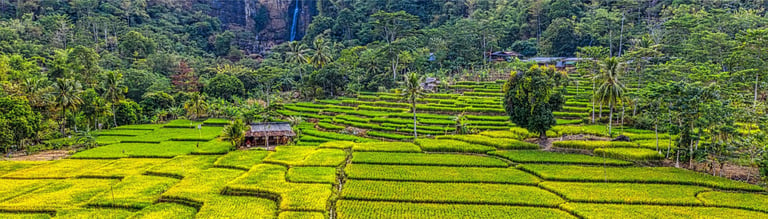
A relative of one of our colleagues spoke enthusiastically about her trip to Indonesia. What had made the biggest impression on her were the beautiful natural scenery and the friendly people. She also mentioned the amount of trash in her story: smoldering fires where people were burning their trash and plastic bottles littering the roadsides. “Why are we actually trying so hard here to sort our trash if it’s not being done there either?” someone asked in response. It got our colleague thinking, because it turns out it’s not that simple. In fact, precisely because it’s more difficult elsewhere, it’s important that we do it right here.
The short answer: in countries like Indonesia, trash litters the streets because in many places there’s no collection, processing, or budget for it. In the Netherlands and Belgium, that system does exist. Moreover, for years, some of the waste in Southeast Asia came from Europe. Starting November 21, 2026, the EU will no longer be allowed to export plastic waste to countries outside the OECD.
We’re using Indonesia as an example, but the same applies to many other countries, such as those in Southeast Asia.
Why do people in Indonesia burn their waste?
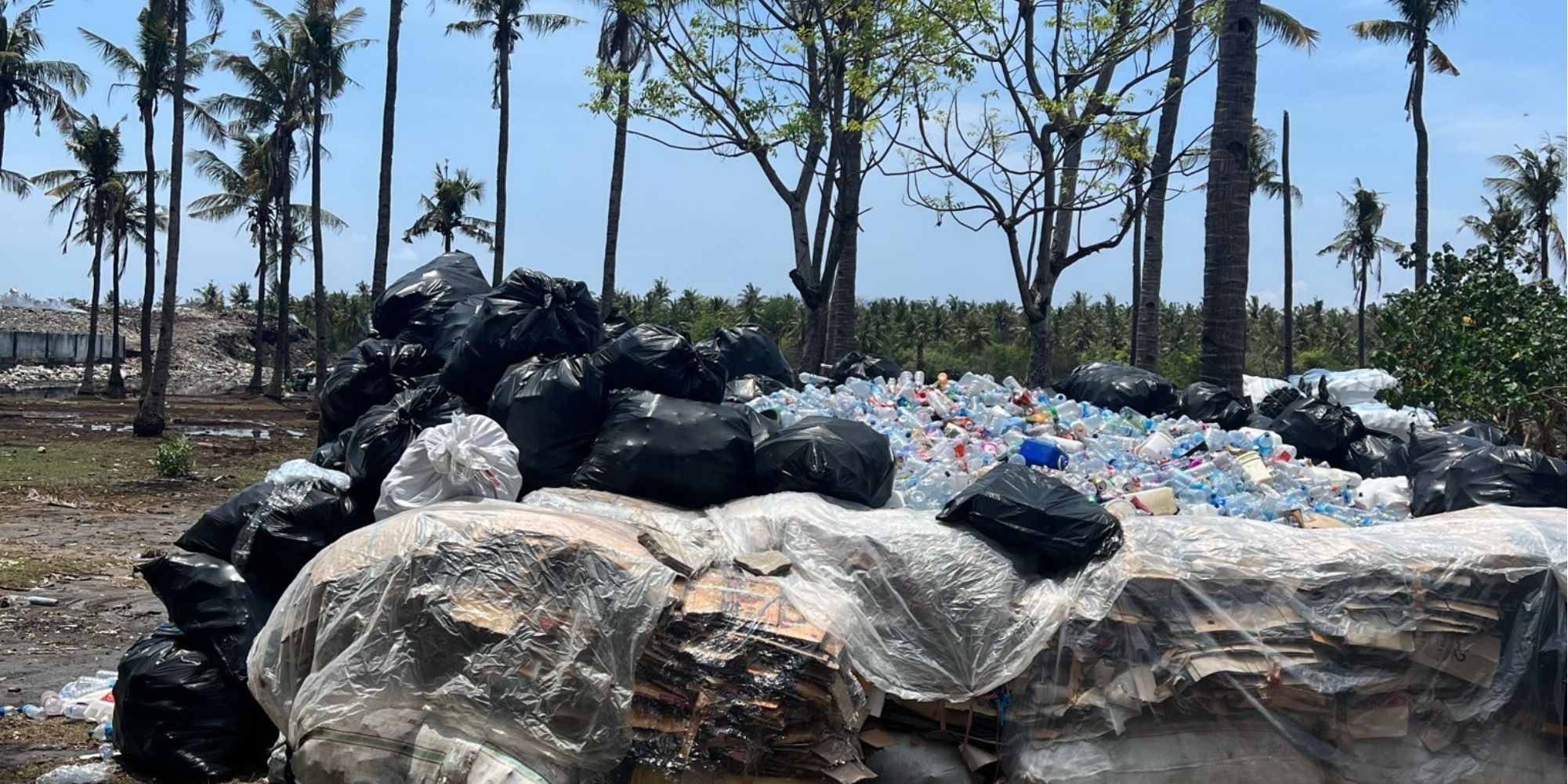
People in Indonesia burn their waste because it isn’t collected. Imagine this: you’re taking a scooter ride around Lombok, one of Indonesia’s less touristy islands. Palm trees line the road, monkeys sit along the way, and you pass by the homes of the local people. These homes are often simple and not always easily accessible. You won’t find a recycling bin here, nor does a garbage truck come by every week. The government budget is limited, and there isn’t enough infrastructure to collect trash everywhere. In some neighborhoods, residents pay a monthly fee to a local neighborhood committee to have their trash picked up. For families who can’t afford this, burning their trash is a free alternative.
Another factor is that the nature of the waste itself has changed. In the past, waste in Indonesia consisted mainly of organic material, such as leaves and food scraps. Due to economic growth, more and more plastic is being used, but the practice of burning waste has persisted.
Since there is no system in place for collection and processing, the trash piles up on the streets and attracts pests. Many residents therefore see burning as the most hygienic option available to them.
Why is there so much plastic on the roadside?
There is so much plastic on the roadside because three factors converge: inadequate waste infrastructure, rapid economic growth, and habits that haven’t yet caught up. As you drive along, you see the roadsides littered with plastic beverage and food packaging.
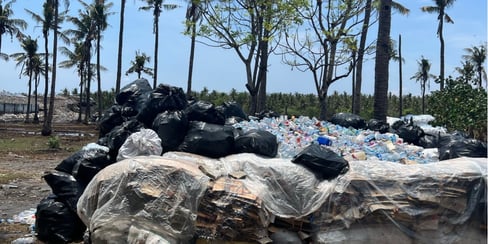 In many places, trash isn’t collected, and there are no public trash cans. People then see no other option but to throw their trash on the street. According to the World Bank, an estimated 85% of plastic waste in rural Indonesia is not formally collected. In cities, 40% of residents have no access to waste collection. Of the 7.8 million metric tons of plastic waste that Indonesia produces annually, 4.9 million metric tons are not properly managed.
At the same time, the economy has grown rapidly in recent decades, and with it, the consumption of packaged food and plastic products. There is increasing attention being paid to the problem, but many schools and communities still lack systematic education about waste separation and the impact of plastic. As a result, a portion of the population does not yet view plastic on the streets as a major problem.
Even when waste is collected, the process is not always properly organized. Official landfills, such as Bantar Gebang near Jakarta, are severely overloaded and often function as open dumps. Due to poor management, strong winds, and flooding during the rainy season, a large portion of the waste is blown or washed back into the surrounding environment. It eventually ends up in the ocean via rivers: of all the plastic that enters the ocean from land, 83% is carried there by rivers.
What is Indonesia doing to combat plastic waste?
Indonesia is working step by step toward a better waste management system. In 2018, the government set the ambitious goal of reducing the amount of plastic in the ocean by 70% by 2025. Steps have been taken since then, such as local bans on single-use plastics in Bali and Jakarta. Due to the scale of the problem and delays caused by the COVID-19 pandemic, the 2025 goal proved to be too optimistic in practice.
The government is now focusing on the next interim goal. By the end of 2029, manufacturers must have reduced their plastic packaging waste by 30%, and Indonesia aims to phase out single-use plastics such as straws, plastic bags, and Styrofoam food containers.
Did the waste in Southeast Asia also come from Europe?
Yes. The Netherlands and Belgium also exported plastic waste for years to Asian countries such as Indonesia, Malaysia, and Vietnam, where processing was cheaper than in Western Europe. Officially, this was for recycling, but those countries often lacked the proper infrastructure. As a result, a large portion of the Western plastic was illegally dumped or burned in the open.
After China closed its borders to foreign plastic waste in 2018, Southeast Asia was flooded with it. Indonesia responded with stricter inspections. In 2019, customs officials inspected more than 2,000 containers and sent hundreds of them back to countries including the Netherlands, Belgium, Germany, Australia, and the United States. Nevertheless, in 2025 the EU still exported some 1.5 million metric tons of plastic waste, about half of which went to countries outside the OECD.
That is now coming to an end. Starting November 21, 2026, a European ban on the export of plastic waste to non-OECD countries—including Indonesia, Vietnam, and Malaysia—will take effect. This ban will remain in place at least until May 2029.
Why, then, does waste separation make sense in the Netherlands and Belgium?
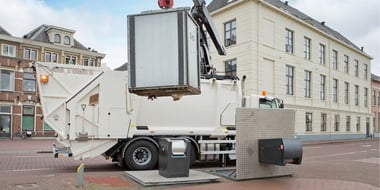
Sorting waste makes sense in the Netherlands and Belgium because the system is already in place. The garbage truck comes by every week to pick up a specific type of waste. Businesses have containers for different types of waste, and there’s a network of sorters, recyclers, and processors ready to turn those streams back into raw materials. Those who have the resources also have a responsibility to use them. This has to do with the power of setting a good example. If everyone waits for someone else to take the first step, nothing will happen—even though 78% of companies are already feeling the effects of raw material scarcity.
It’s also important to share this knowledge. The Netherlands is already helping Indonesia in various ways to reduce waste. The Dutch foundation The Ocean Cleanup deploys so-called Interceptors in Indonesian rivers: energy-neutral vessels that fish plastic out of the water before it reaches the sea. The Plastic in Circles program focuses on smart waste sorting centers, a circular plastic factory, and reusable packaging.
Not despite, but precisely because
The question of why we’re trying so hard when it’s not happening elsewhere is understandable. The answer is simple: in the Netherlands and Belgium, the collection infrastructure, the expertise, and the processing facilities are already in place. Elsewhere, these systems are still under active development. That doesn’t make our waste separation efforts pointless—it actually makes them even more important for achieving a world free of waste.
What can your organization do?
As an organization, start by gaining insight into your waste streams. What streams do you have, how much is there, and where do they originate? Next, make sorting at the source as easy as possible by placing the right bins in the right spots. This ensures that the waste generated at your business location doesn’t end up in the general waste unnecessarily. This not only increases recycling rates but also lowers waste disposal costs.
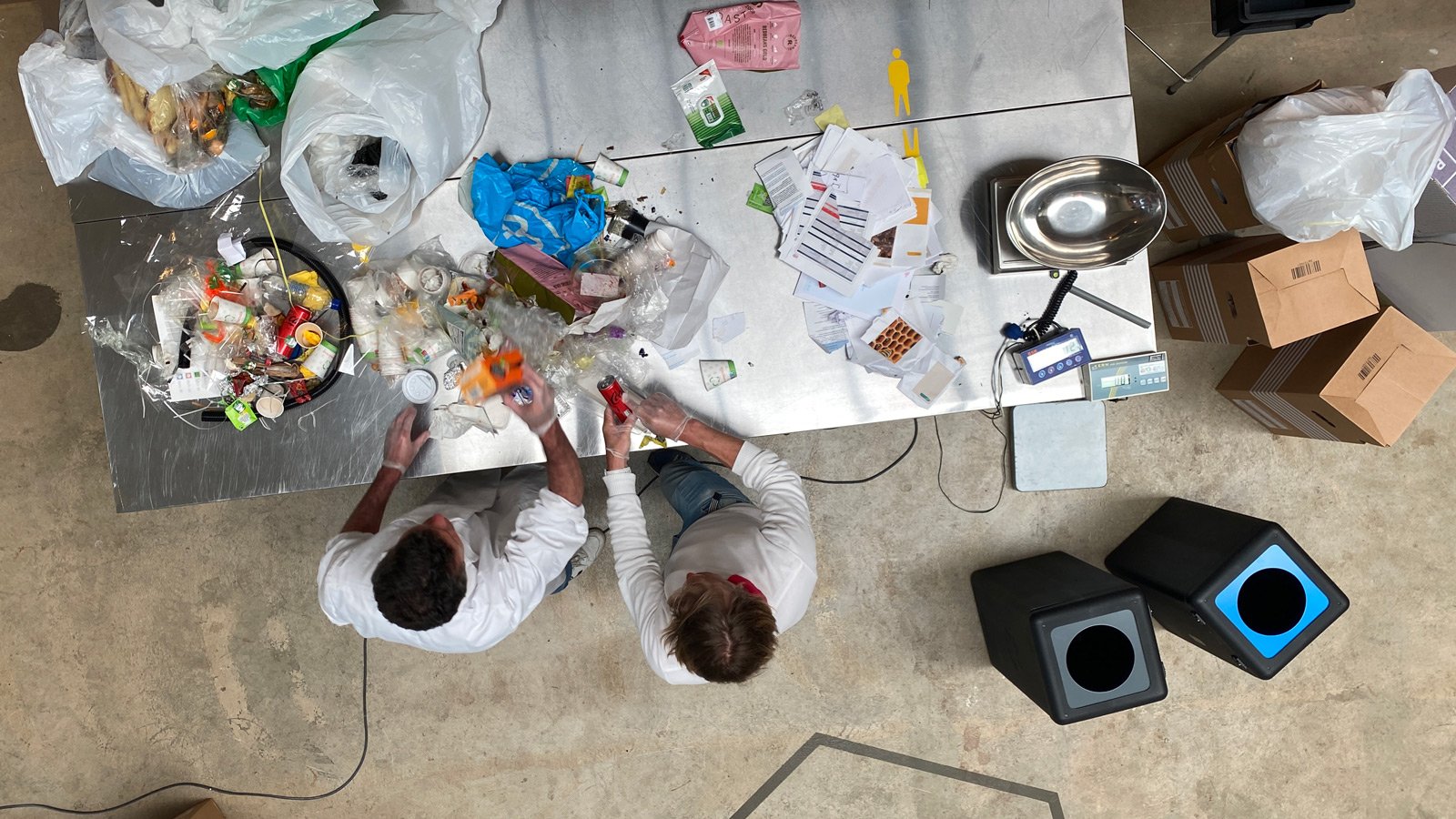
Discover which waste streams your organization generates with a Zero Waste Workshop.
Our experts take a look with you and help you take the first steps right away to set up your waste management as efficiently as possible.

Read also
The waste policy in Sri Lanka
Read also
A view of waste from Japan
Stay informed
Follow us on LinkedIn. Here we share the latest news on regulations, circular topics and developments in the industry. You can also subscribe to our newsletter. Curious what Milgro can mean for your operations and waste processes? Feel free to get in touch.