

“All the trash ends up in the same pile anyway.” It’s a thought that’s often voiced. And to be honest, it’s understandable, because you don’t really see much of it yourself. The garbage truck comes, the bin is emptied, and then the trash is out of sight.
But in reality, things work quite differently. Of all the waste processed in the Netherlands, over 60% is given a new purpose through recycling or reuse. Less than 2% ends up in landfills (CBS, 2022). So where does this misconception come from?
Where does this misconception come from?
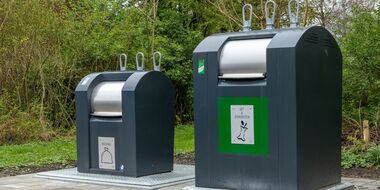
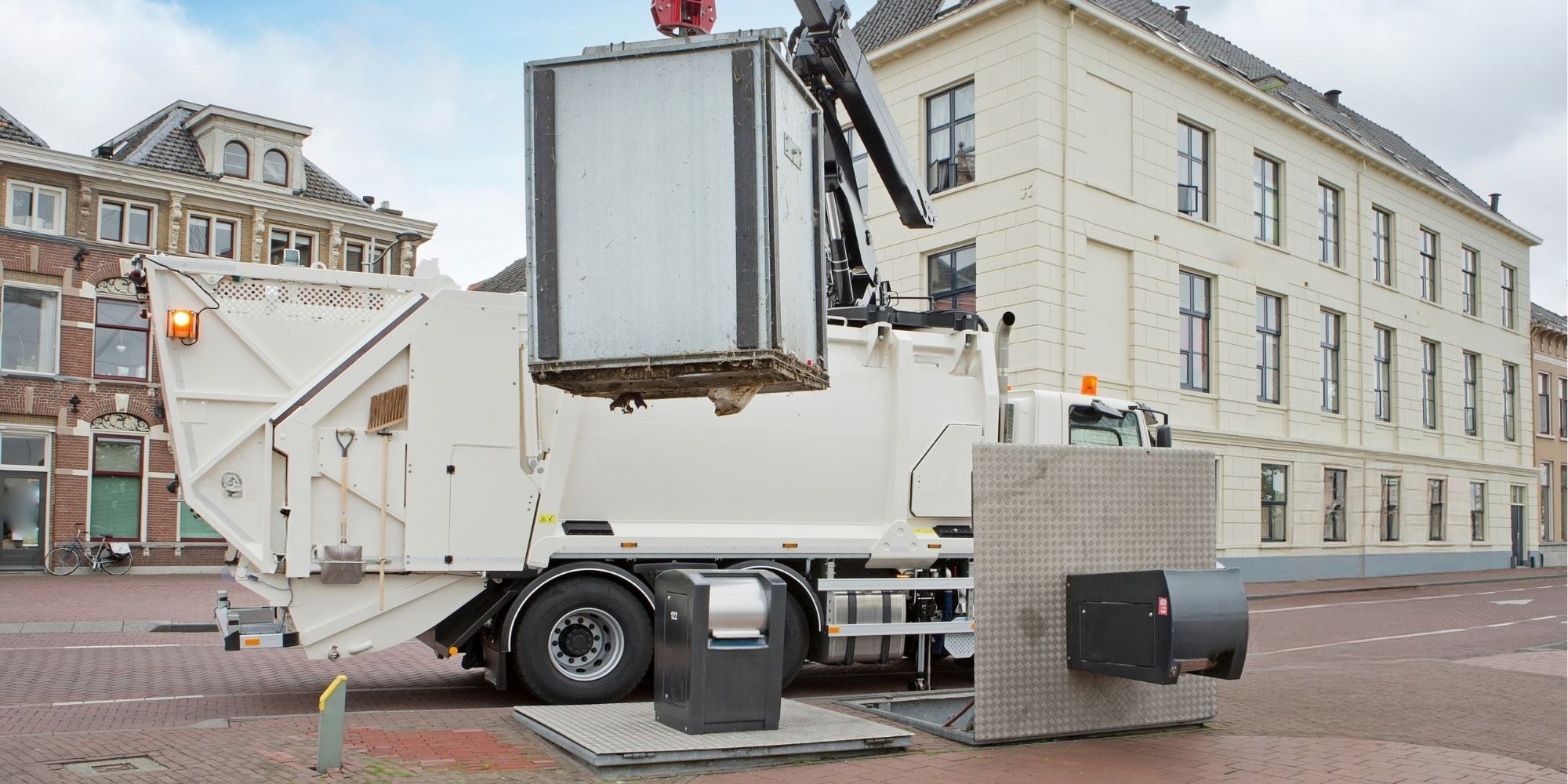
Part of the skepticism arises during the collection process itself. Many people see a truck picking up two types of waste at the same time and jump to conclusions. What they don’t see is that many of those trucks have multiple compartments, keeping the waste streams separate during transport. This is also a smart approach, because when a single truck carries two types of waste in one trip, it saves on fuel and reduces CO2 emissions.
In addition, some municipalities use post-separation. Plastic packaging is collected along with the residual waste and later separated by machine. That may sound like “all mixed together,” but here, too, materials are ultimately separated and recycled. It just doesn’t happen at the source (where the waste is generated), but afterward at a sorting facility.
What are the pros and cons of post-separation?
In some situations, post-separation can be a practical choice. Think of large cities like Rotterdam, Amsterdam, and Utrecht. In these cities, many people live in close proximity to one another and in smaller spaces than in villages. Inside the home, there’s often simply no room for multiple trash cans, and on the sidewalk, there’s no space for separate wheelie bins per household. Because it’s difficult to keep waste separated at the source (at the resident’s home), large cities often choose to separate it downstream (afterward, using machines).
As practical as it is, this method also has its limitations. Materials become contaminated more quickly when they aren’t separated immediately. Consider food packaging that leaks onto a cardboard box. In a separate paper bin, the box stays dry and can be recycled into new cardboard. With post-separation, it often becomes contaminated, making recycling no longer possible. Properly sorted waste therefore has a better chance of being reused.
At Milgro, we therefore view source separation as our guiding principle. By separating waste streams immediately, they remain suitable for high-quality reuse, and fewer raw materials are lost.
Why is source separation worthwhile in the workplace?
The misconception that everything ends up in one pile stems mainly from what we see: a single truck collecting multiple waste streams, or a single trash bin whose contents are sorted only later. But whether waste gets a second life depends largely on how well it is separated at the source. This applies at home (with the exception of large cities), but also in the workplace.
The fact that waste isn’t sorted properly at work is often not due to a lack of willingness. Rather, it stems from a lack of clarity: what kind of waste stream is this, exactly? And which waste bin does it belong in? And that’s a shame, because proper sorting is one of the most effective ways to reduce your waste costs.
Residual waste is, in fact, one of the most expensive waste streams. It usually ends up in the incinerator, which costs money, emits CO2, and results in the loss of raw materials. That’s precisely where the greatest savings can be made. We regularly see our customers unnecessarily dispose of items like plastic wrap, other plastics, and cardboard in the general waste. This is often because there’s no separate collection for them, or because it’s unclear which waste stream they belong to.

Clear instructions make all the difference
Our posters can help with that. They show at a glance which waste belongs where. Thanks to this visual recognition, employees immediately dispose of the right waste in the right bin. And if the waste management provider later collects multiple waste streams in a single truck? Then you can be sure: it won’t all end up mixed together.
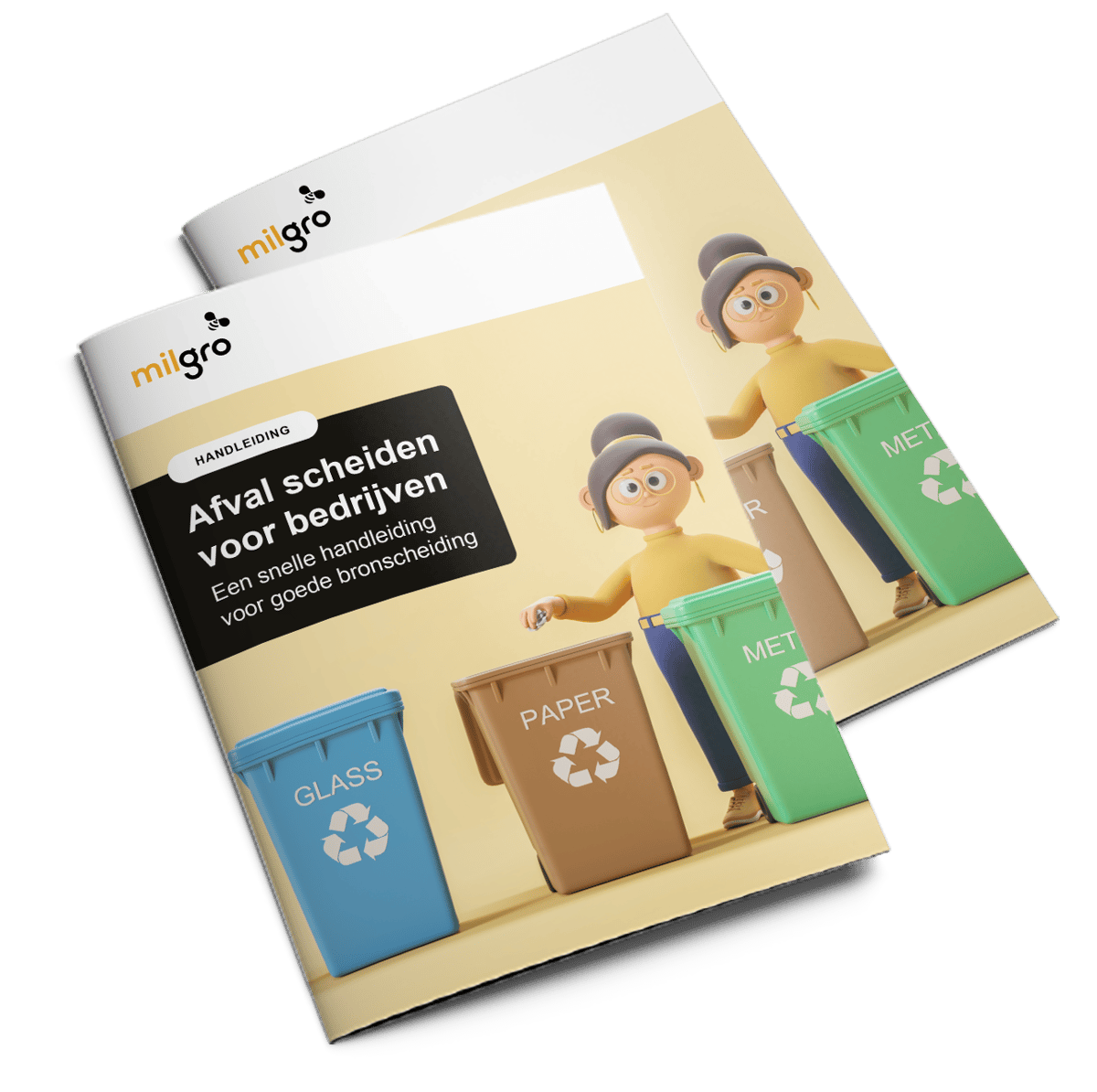
Want to learn more about waste separation?
Download our free guide. It explains what a good waste separation process delivers and which practical steps you can take. That way, you meet the legal requirements and work towards a more sustainable and efficient organization.

Stay informed
Follow us on LinkedIn. Here we share the latest news on regulations, circular topics and developments in the industry. You can also subscribe to our newsletter. Curious what Milgro can mean for your operations and waste processes? Feel free to get in touch.