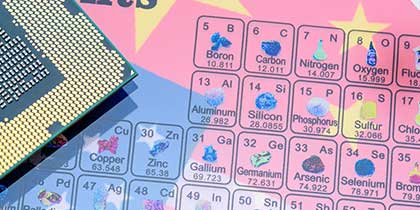


The energy transition can only succeed if Europe first gets the raw materials transition in order. Lithium, cobalt, nickel, and rare earth metals are the building blocks of renewable energy and electric mobility. Without sufficient access to these critical materials, the rollout of solar panels, wind turbines, electric cars, and battery storage will stall. The availability of raw materials therefore directly determines how quickly and reliably the energy transition can proceed.
Recently, the European Court of Auditorspublished a critical report concluding that Europe is failing to meet its own targets for critical raw materials. Extraction within the EU remains limited, recycling rates are low, and efforts to diversify supplies from multiple countries have so far yielded little results. This makes Europe vulnerable to price increases, geopolitical tensions, and supply issues.
Targets and Shortfalls: CRMA 2030 in Practice
With the Critical Raw Materials Act (CRMA) of 2024, the EU has set ambitious targets for 2030:
- 10% of critical raw materials must be extracted within Europe
- 40% must be processed within the EU
- 25% must come from recycling
The Court of Auditors notes that these targets are falling far short in practice. For example, Europe has:
- achieved only a fraction of its local extraction targets; for many rare earth metals, more than 90% is still imported
- failed to sufficiently expand processing capacity: for example, for cobalt and lithium, less than 20% of European demand is met by domestic refining capacity
- barely scaled up recycling: 7 of the 26 critical raw materials are recycled at a rate of 1–5%, and 10 materials are not recycled at all
These figures make it clear that current policies are not effective enough. As the Court of Auditors states: without accelerating production, processing, and recycling , the 2030 targets will be seriously delayed. Every metric ton of cobalt that is not recovered today means a delay for future battery factories and wind turbines.
Read more on Euronews.
Dependence on a Few Countries: Geopolitical Vulnerability
Europe remains dependent on a very small number of suppliers for critical raw materials. For some materials, such as rare earth metals and cobalt, the EU relies on a single country for more than 90% of its imports. China dominates not only mining but also refining and processing, leaving Europe with virtually no buffer.
Other key suppliers include:
- Turkey: a major source of borates and rare minerals
- Chile: the largest producer of lithium outside of China
- Democratic Republic of the Congo: supplies the majority of the world’s cobalt
Although the EU is making efforts to reduce this dependence through strategic partnerships and import diversification, the figures show that this strategy has had little effect so far. As a result, Europe remains vulnerable to trade restrictions, price increases, or political tensions in key exporting countries.
The Financial Times refersto a “fragile foundation” under European raw materials policy and warns that without structural changes, the supply of critical materials will create a bottleneck for the energy transition.

Circularity as a Necessity
The report shows that recycling and circular reuse have barely gotten off the ground. Nevertheless, circularity offers the opportunity to:
- reduce dependence on imports
- reduce geopolitical risks
- keep valuable materials in the supply chain longer
- retain economic value within Europe
Circularity is not just another layer of sustainability, but a strategic prerequisite for security of supply. Without scaling up recycling, Europe will remain structurally vulnerable.
The Netherlands in the European Supply Chain
The Netherlands plays a key role as an importer, processor, and producer of high-tech products. At the same time, large volumes of materials leave the system as waste or residual streams. Statistics Netherlands (CBS) and the Netherlands Materials Observatory demonstrate how crucial insight and circular strategies are for mitigating vulnerabilities in the supply chain.
By managing existing material flows more intelligently—from e-waste to industrial residual streams—the Netherlands can help reduce European dependence while preserving economic value.
A warning, but also a direction
The message from the European Court of Auditors is clear: ambition alone is not enough. Without implementation, scaling up recycling, and truly closing the loop, climate goals and raw materials policy will continue to clash.
Circularity is not an end in itself, but a necessary condition for making any progress at all. Those who invest now in insights, high-quality processing, and collaboration along the supply chain are building resilience for the future. Those who do not will remain dependent on scarce and geopolitically sensitive raw materials.
Waste is no longer a residual problem but a strategic source of raw materials. And that is precisely the key to making the energy transition a success.

Podcast: Food for Thought
Thepodcast “Food for Thought ” explores these challenges: from dependencies and scarcity to circular design strategies and supply chain collaboration. The conversations show that raw materials cannot be viewed in isolation from international relations and market pressures, and that these factors together have a direct impact on the products we use and the prices we pay for them.
From Circular Ambition to Action: 7 Ways to Close the Gap
Reducing pressure on raw materials therefore means more than just recycling. It requires smart choices: circular design, utilizing waste streams, organizing supply chains more consciously, and exploring alternative sources. By narrowing the Circularity Gap, companies can reduce their dependence on primary raw materials and, in turn, lower price pressures on consumers. In *From Circular Ambition to Action: 7 Ways to Close the Gap*, you’ll find practical tools to start reducing the impact of raw material scarcity today, while keeping an eye on affordable solutions for everyone.
Download the free roadmap and get started

Stay informed
Follow us on LinkedIn. Here we share the latest news on regulations, circular topics and developments in the industry. You can also subscribe to our newsletter. Curious what Milgro can mean for your operations and waste processes? Feel free to get in touch.

.jpg?width=380&name=Uitgelichte%20afbeelding%20(52).jpg)