




Waste management is a complex puzzle for many companies. Costs are rising, regulations are becoming stricter and incineration plants (WWTPs) are checking more closely than ever for correct waste classification. An incorrectly classified piece of waste can simply go toward residual waste, resulting in high processing costs, additional CO₂ levy and WAB.
The good news: with proper EURAL classification, companies can not only save costs, but also contribute to a circular economy. This goes beyond administrative obligations. It is a strategic tool to reduce residual waste, make optimal use of valuable raw materials and gain insight into all flows.
Why is correct waste classification crucial for residual waste and carbon tax?
Waste classification literally determines the route of waste: will it be reused, recycled or incinerated? Incorrect classification almost always means that waste goes toward an incinerator. This not only results in higher costs, but can also lead to compliance issues and risks in sustainability and ESG reports.
Case examples illustrate this:
-
Hazardous chemical mixture en route: a vehicle from Belgium to Denmark contained corrosive and flammable liquids as well as toxic substances in poorly sealed containers. The waste could not be processed in the regular stream and was rejected, so it had to be incinerated as residual waste and the company paid additional costs.
-
Sulfuric acid mixed with acetone: laboratory samples were presented as "waste sulfuric acid. Being a flammable and caustic mixture, it had to be correctly classified with a UN number according to ADR. Rejection followed and the waste was treated as residual waste, with higher processing costs.
-
Glue-resin-kit mixtures: non-combustible glue, resin and sealant are sometimes allowed together, but sealant can fall under class 4 (flammable solids) and glue-resin under class 3 (flammable liquids). Misclassification caused the stream to be reclassified as residual waste or divided into multiple streams, causing additional costs and administrative operations.
Correct classification protects companies from unexpected costs and risks and contributes to sustainable waste management.
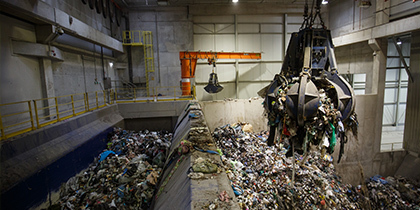
Which waste streams result in residual waste in incinerators?
Certain EURAL codes almost always end up in incinerators in practice:
- 19 12 10 - mixed household waste
- 19 12 12 - mixed industrial residual waste
- 20 03 01 - mixed industrial waste (office, facility services)
- 20 03 07 - residue
- 20 03 99 - other mixed streams
- 18 01 04 - contaminated mixed streams
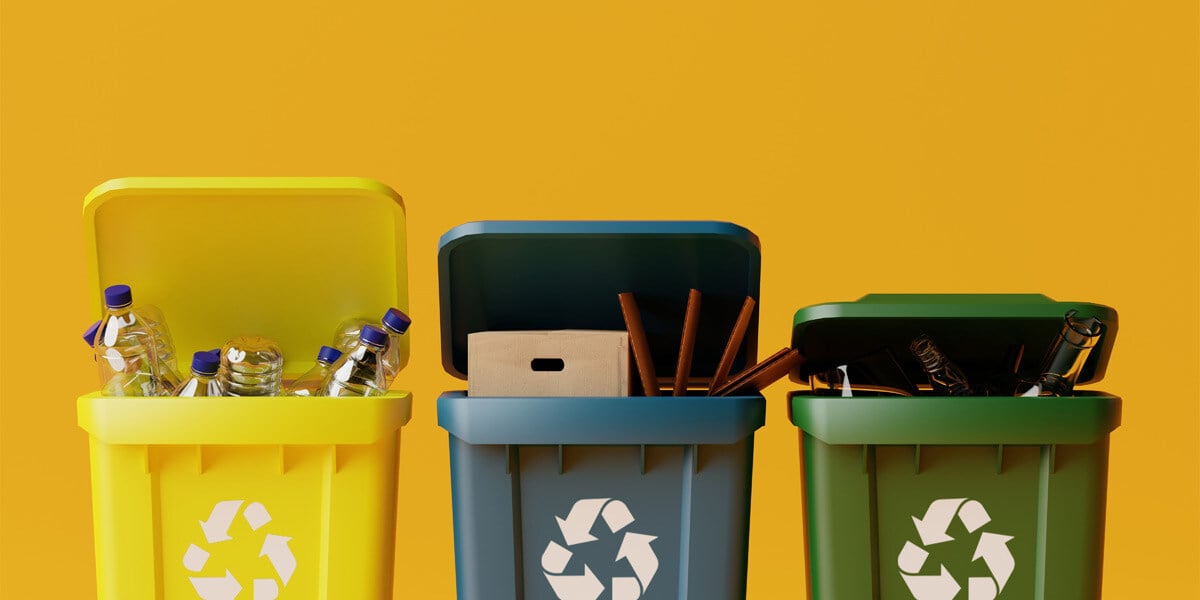
Even small mixtures can result in a stream being classified as residual waste. Proper separation and classification is thus crucial for cost control and sustainability goals.
What does CO₂ tax mean for residual waste and incineration costs?
The CO₂ tax is an important government incentive to encourage incinerators to reduce emissions and make recycling more attractive. Incinerators pay the levy and pass it on to companies through processing costs. Read all about it here: Central government
Key figures:
- 2025: €152 per ton of CO₂
- 2030: €295 per ton of CO₂
- Reduction of dispensation rights until 2033 → full levy on fossil CO₂(Grant Thornton)
The direct effect: residual waste becomes structurally more expensive, and companies that do not separate feel this directly.
How does the WAB affect the cost of residual waste?
In addition to the CO₂ levy, the Statutory Waste Tax (WAB) applies to residual waste that is incinerated. Rates rise sharply:
- 2025: €39.70 per ton
- 2028: €90.21 per ton
- 2035: €113.81 per tonne(State finances)
The combination of WAB and carbon tax makes residual waste the most expensive processing route.
How do incinerators handle residual waste and fees?
Incinerators adjust rates based on CO₂ levy and WAB and strictly check for correct classification. Deviations lead to rejection: a waste stream that is incorrectly separated or incorrectly classified is rejected or immediately reclassified as residual waste. This means extra costs per ton, higher CO₂ charges and more administrative work for the company. Practical examples show that an incorrectly classified office waste or mixture of chemical waste streams often leads to rejection, after which it still ends up in a more expensive residual waste stream. By classifying and separating waste streams correctly, companies can avoid rejection and thus reduce both costs and CO₂ emissions.
What challenges do companies face with residual waste and CO₂ charges?
Companies face several challenges:
- complex EURAL classification
- increasing processing and levy costs
- need to reduce residual waste
A strategic approach to waste streams is essential for cost control and sustainable operations.

What benefits does correct waste classification provide?
Correct classification provides clear benefits:
- Lower costs: less residual waste → less WAB and CO₂ levy
- More recycling: valuable raw materials remain in the chain
- Less risk: rejection or additional charges are prevented
- Better overview: clear data and monitoring
Also working on reducing your (residual) waste and CO₂ emissions? Milgro developed a method to measure and data-driven reduce CO2 emissions and you can find it here.

Time to act towards Circular economy
Download the roadmap to close the circularity gap

Stay informed
Follow us on LinkedIn. Here we share the latest news on regulations, circular topics and developments in the industry. You can also subscribe to our newsletter. Curious what Milgro can mean for your operations and waste processes? Feel free to get in touch.
.jpg?width=380&name=Uitgelichte%20afbeelding%20(52).jpg)