

The European Union is introducing an important directive that better protects consumers and combats greenwashing: the Consumer Empowerment Directive (EmpCo/ECGT). Starting September 27, 2026, companies must ensure that their sustainability claims are transparent, substantiated, and verifiable. So the clock is ticking: organizations now have time to adapt their products, marketing, and communications before the law takes effect. In this blog, we clearly explain what the directive entails and what changes are coming.
What is the Consumer Empowerment Directive?
The Consumer Empowerment Directive is part of the EU’s policy to combat misleading sustainability claims and provide consumers with objective information about the impact of products and services. The goal is clear: to prevent greenwashing and enable consumers to make choices based on reliable information.
Vague or unsubstantiated claims such as “green,” “ecological,” or “environmentally conscious” are no longer permitted unless they are supported by evidence or a recognized certification mark, such as the EU Ecolabel. Claims regarding CO2 offsetting must be transparent: terms such as “climate-neutral” may only be used if it is clear which portion of the emissions has actually been offset.
In short, the ECGT promotes clear communication about sustainability and strengthens ESG governance within companies.
Who is the Consumer Empowerment Directive relevant to?
Effective EU-wide as of September 27, 2026, and primarily focused on B2C markets. Organizations must critically assess their product portfolios and marketing claims to comply with the new requirements.
Key considerations:
- Environmental claims must be specific and verifiable; for example, replace “eco-friendly bottle” with “25% ocean-bound plastic and 75% recycled PET.”
- Certifications and labels must be verified by an independent body.
- Product designs must not mislead consumers, for example by artificially limiting the product’s lifespan.
Minister Micky Adriaansens (Economic Affairs and Climate) states:
“Misleading information hinders fair competition and our economy. It’s good that this EU directive allows us to take concrete steps toward improvement and ensure that information about sustainability does not contain empty promises.”
When must companies comply with the initial requirements?
The directive will take effect in mid-2026. From that point on, companies must ensure that all their sustainability claims and labels are verifiable, substantiated, and transparent. The first step is therefore often to take stock of all current claims and labels and verify whether they comply with the new guidelines. Non-compliance can result in fines of at least four percent of annual revenue, as stipulated in the Green Claims Directive.
In addition, this regulation aligns with other EU legislation, such as:
What does this require of organizations?
Companies must provide clear and measurable evidence to support the sustainability claims they communicate. This means:
- Use specific figures: State concrete percentages or the origin of materials.
- Verified certifications: Display only labels that are independently certified.
- Transparency regarding CO2 offsetting: Indicate what portion of emissions has actually been offset.
An EU study shows that:
- 53% of environmental claims are vague or misleading
- 40% are unsubstantiated
- 50% of eco-labels are weak or unverified
Consumers are noticing this: in the Netherlands, 85% sometimes doubt the sustainability of products, and only one-third trust eco-labels.
Research shows that three in ten Dutch people often or always consciously buy sustainable food products, while more than half do so occasionally. However, more than four in ten Dutch people believe that making sustainable choices is pointless, even though 57% do believe these choices are important. In Belgium, two out of three consumers believe that most claims are marketing tactics.

The EmpCo can increase consumer confidence in sustainable choices, provided that companies adhere to the new guidelines.
Practical tips for companies
- Use generic claims only for exceptional performance, such as products that comply with Type I ecolabels according to EN ISO 14024, for example, the Milieukeurmerk.
- Verify thatall sustainability claims in marketing materials and annual reports are objective and measurable.
- Ensure that claims are verifiable: an independent party must be able to confirm that the information is accurate.
Companies such as Unilever and De Bijenkorf have recently had to amend or remove vague claims.
Learn more and be prepared
Want to make sure your organization is ready for the Consumer Empowerment Directive and that your sustainability claims comply with the new rules? Download our practical checklist or sign up for our updates on EU legislation and ESG governance.
Stay informed: Follow us on LinkedIn and never miss an update on laws and regulations that affect your organization.
Want to know more?
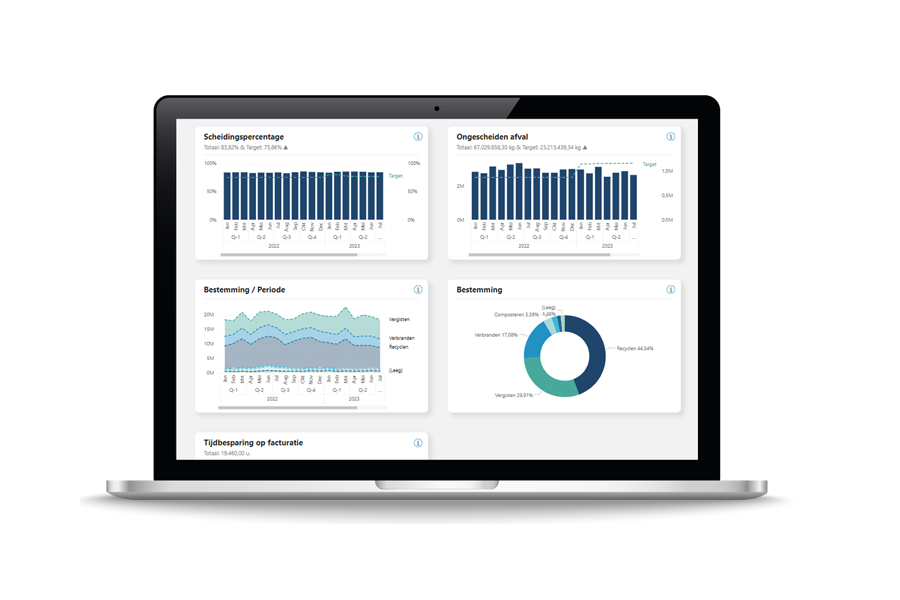
Make an appointment with one of our experts or book a demo of the Milgro dashboard. We'd be happy to tell you all about it.

Stay informed
Follow us on LinkedIn. Here we share the latest news on regulations, circular topics and developments in the industry. You can also subscribe to our newsletter. Curious what Milgro can mean for your operations and waste processes? Feel free to get in touch.