




The Packaging and Packaging Waste Regulation (PPWR) provides Europe with a single new framework for packaging and packaging waste. The regulation entered into force on February 11, 2025, and will generally apply starting August 12, 2026. This shifts the basis from national interpretation to a single, directly applicable European framework. However, this does not mean that preparations are the same in every country. In practice, particularly between the Netherlands and Belgium, there are clear differences in how organizations find information, which authorities are relevant, and how the regulation is being implemented.
This makes the topic relevant to a broad range of organizations—not only those operating in both countries, but also organizations that operate primarily in the Netherlands or Belgium and want to understand the national implementation context. The fundamentals of the PPWR are the same across Europe, but the path to preparation, registration, interpretation, and operational follow-up is not entirely the same.
The content of the PPWR is fundamentally the same in the Netherlands and Belgium, but the practical implementation regarding producer responsibility, registration, and reporting follows different national pathways. In the Netherlands, Verpact serves as a key knowledge and coordination hub. In Belgium, the Interregional Packaging Commission (IVC), Fost Plus, and Valipac, among others, play a central role in the implementation context. As a result, it is important to have a clear understanding of how the PPWR is implemented in practice in each country, even if you are active in only one of the two markets.
What is consistent across Europe under the PPWR?
The main thrust is the same for all member states: less packaging waste, more recyclable packaging, more reuse, and greater use of recycled materials. The European Commission describes the PPWR as a regulation intended to harmonize the entire packaging sector in the EU, from design and composition to waste management and prevention. The guidance published in March 2026 is also specifically intended to further clarify its application across the EU. The substantive basis is therefore the same everywhere—in the Netherlands, Belgium, and the rest of the EU.
Why is the implementation different in the Netherlands and Belgium?
Because the PPWR is not entering a blank slate. Both the Netherlands and Belgium already have existing structures in place regarding packaging, producer responsibility, and reporting. The European rules are therefore the same, but their translation into practice involves different national organizations, tools, and implementation systems. As a result, the preparation process in the Netherlands may feel different from that in Belgium, even though both countries operate under the same regulation.
That difference doesn’t necessarily lie in what the PPWR aims to achieve, but mainly in the ways organizations organize the information, guidance, and practical follow-up. And that’s exactly why it makes sense to look not only at “the European PPWR,” but also at the national context in which you place packaging on the market.
The Netherlands: What Role Does Verpact Play?
In the Netherlands, Verpact serves as a key knowledge and coordination hub for the PPWR. There, organizations can find explanations, webinars, FAQs, and practical guidance on what the legislation entails and how to stay informed about its further implementation. Verpact also emphasizes that the PPWR will be further clarified through guidance, tools, and detailed technical specifications. For Dutch organizations, Verpact is therefore a logical place to track the translation of European rules into practical preparations.
For many organizations in the Netherlands, this also means not viewing the PPWR in isolation from existing reporting and packaging issues. Roles, documentation, material choices, and packaging data are all interconnected. That is precisely why it helps to examine Dutch practices not only from a legal perspective but also from an operational one.
Belgium: What roles do IVC, Fost Plus, and Valipac play?
In Belgium, the implementation framework is organized differently. There, the Interregional Packaging Commission (IVC) and the implementing organizations Fost Plus and Valipac play a central role. Belgian guidelines make it clear that companies must not only follow the main principles of the PPWR, but also understand how that regulation aligns in practice with the Belgian structure for packaging and producer responsibility. Business organizations in Belgium also point out that companies must revise their packaging strategies in a timely manner in light of the new rules.
This means that organizations in Belgium often structure their preparations using different sources and channels than those in the Netherlands. The European framework remains the same, but Belgian practice requires specific attention to implementation, registration, and monitoring.
What do these differences mean in practice?
For organizations in the Netherlands, preparation often involves following Verpact’s publications, defining roles clearly, and then structuring packaging, documentation, and data accordingly. In Belgium, the approach is different because the context surrounding IVC, Fost Plus, and Valipac plays a greater role. The result is not that the PPWR becomes two different laws, but rather that operational preparations may be organized differently from country to country.
And that is precisely where insight into data becomes important—not only regarding what is brought to market, but also regarding the packaging and waste streams that result from it. Those who have a clear picture of packaging and waste data can more quickly identify volumes, material types, components, and areas of concern—by country, by stream, and by packaging type. Milgro positions itself precisely at that intersection: using dashboards, data analysis, and operational expertise to provide insight into waste and raw material flows, so that organizations can better manage performance, reporting, and future decisions.
Why packaging and waste data are so important here
The PPWR isn’t just about design and documentation—it’s also about gaining a firm grasp on real-world practices. What types of packaging do you use in the Netherlands? Which ones in Belgium? Which material streams recur in both markets? Where are the differences in volumes, components, or waste streams? And where is the information missing that you’ll soon need to substantiate your decisions or set priorities?
That’s exactly why this topic lends itself so well to a data-driven approach. When you link packaging data to waste data from packaging streams, you get a much clearer picture of where the risks and opportunities lie—not only for compliance by August 12, 2026, but also for future decisions regarding reduce, reuse, and recycle.
How can you prepare effectively for the differences between the Netherlands and Belgium?
The smartest approach is usually not to look solely at the law, but to consider the practical context for each country. That means:
- determine what role you play in that country
- identify which agencies and procedures are relevant
- link packaging to markets
- compare packaging data with waste data
- identify where the biggest gaps and risks lie
This way, you’ll not only build your knowledge of the PPWR but also gain a practical overview. And that’s exactly what’s needed to avoid waiting until 2026 to discover where the differences really matter.
The Core
The PPWR sets a single European direction, but its implementation feels different in the Netherlands than in Belgium. That’s why it pays to look at the relevant stakeholders, the implementation context, and the data you need to properly track packaging streams on a country-by-country basis. Whether you operate in the Netherlands, Belgium, or both: the clearer your overview, the easier it becomes to move from regulations to practical preparation.


The PPWR requires more than just knowledge of the rules. You want to know what your role is, which types of packaging require attention, and what data you need to get in order right now. In the PPWR starter kit, you’ll find a practical step-by-step plan, a separate checklist, and additional guidance to help you work toward the August 12, 2026, deadline.
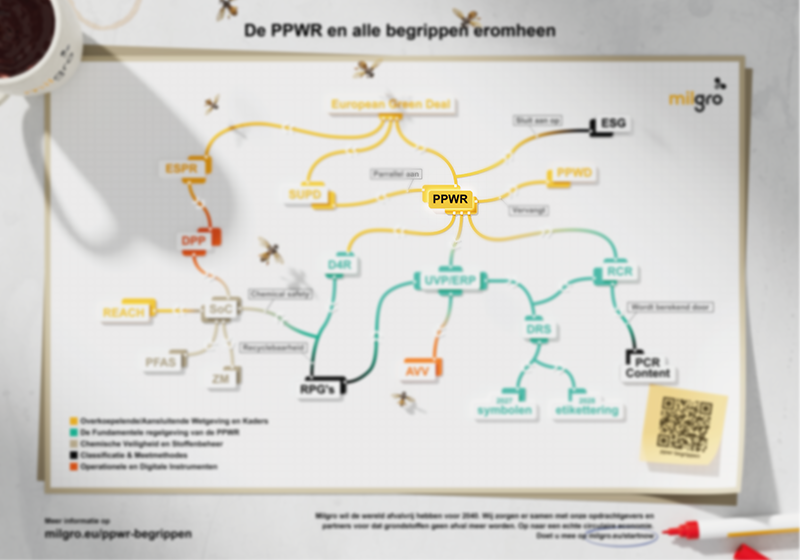
Download the starterkit
Helpful starter kit with a checklist, step-by-step plan, and examples to help you comply with the PPWR!


Stay informed
Follow us on LinkedIn. Here we share the latest news on regulations, circular topics and developments in the industry. You can also subscribe to our newsletter. Curious what Milgro can mean for your operations and waste processes? Feel free to get in touch.