



Every year, 35 million metric tons of waste are generated in the European Union because repairable goods are thrown away. This has a huge impact on the environment. But there’s good news: in February 2024, the European Council and the European Parliament reached an agreement on the “right to repair” for consumers.
As part of the European Green Deal, the new legislation is intended to reduce waste and save consumers money. That’s why today we’re focusing on step 5 of the R-ladder: repair.
Why is there so much focus on repair right now?
Starting in 2026, the European ECGT Directive will ensure that companies can no longer make unfounded sustainability claims. The introduction of this legislation is intended to combat greenwashing. At the same time, it requires companies to adopt a more efficient, sustainable approach to raw materials. But it also calls for a more sustainable way of consuming. That’s where repair comes into play.
A 2020 European survey revealed that as many as 77% of consumers would rather have their goods repaired than buy a new product. Yet the vast majority of products are replaced or even thrown away. This is because repairs are too expensive, especially compared to buying a new product. Often, repair services are also lacking.
In addition, there is a problem with product design. Some products, such as smartphones, are designed to break down over time. It is not possible to remove or replace specific parts. As a result, you, as a consumer, are forced to buy a new product.
What does the legislation on the right to repair mean?
The new European agreement aims to make it easier and cheaper to have defective products repaired. This not only reduces waste but also supports the repair sector. All of this contributes to sustainable consumption.
Various measures are designed to promote repair and reuse:
- Does repairing a product cost the same or less than replacing it? If so, sellers are required to offer repairs within the statutory warranty period. After the repair, the statutory warranty is extended by another year.
- Even outside the statutory warranty period, consumers have the right to request repairs for certain products, such as washing machines, vacuum cleaners, bicycles, and smartphones.
- While the repair is being carried out, you, as a consumer, will be offered a replacement device.
- Online platforms must direct consumers to local repair shops.
- Manufacturers must provide free repair and maintenance information with their products.
The Benefits of Repair
It’s no coincidence that repair ranks significantly higher on the R-ladder than a processing method such as recycling. Repair offers a number of significant advantages. By repairing products instead of throwing them away, we extend the lifespan of raw materials. This is a crucial principle in the circular economy.
This also means that fewer raw materials are needed to produce new goods. This saves us significant costs and helps prevent the depletion of natural resources.
Recycling also brings products back into the cycle, but it requires a lot of energy. Repair fits much better into the circular economy. By repairing, we save significantly more energy, raw materials, and costs. Products last longer, and valuable resources are preserved for future generations.
Milgro and Repair
Milgro recognizes the importance of repair. In the coming period, we will devote more energy and creativity to this effort. We fully realize that repair isn’t always easy. Repair is often labor-intensive and typically involves small volumes. If you don’t plan to reuse the repaired product, it can be difficult to find a market for it.
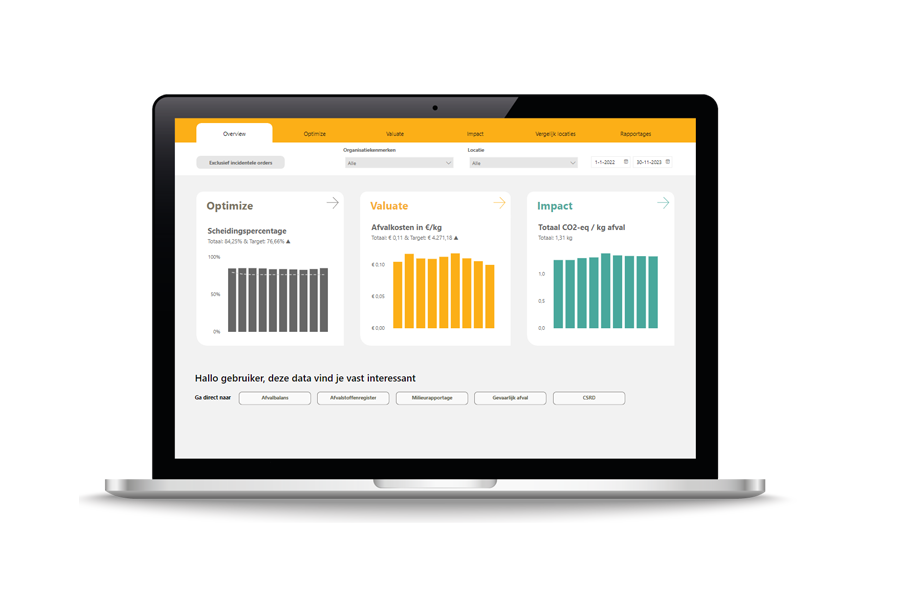
Explore your repair opportunities
See how repair can reduce your environmental impact and improve your CO₂ performance

Stay informed
Follow us on LinkedIn. Here we share the latest news on regulations, circular topics and developments in the industry. You can also subscribe to our newsletter. Curious what Milgro can mean for your operations and waste processes? Feel free to get in touch.
.jpg?width=380&name=Uitgelichte%20afbeelding%20(52).jpg)