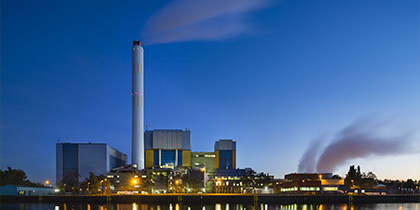




On paper, it seems simple: recyclers preserve materials, while incinerators destroy them. In a circular economy, the choice would therefore be an easy one. In practice, however, it’s more complicated. Because as long as not all waste streams are recyclable, incineration remains part of the system. The real question, therefore, is not just which option offers the best solution, but above all, which role makes the most sense at which point in the chain.
That question has become more urgent since the Circular Materials Plan (CMP) took effect on December 30, 2025 ,as the successor to LAP3. The CMP looks not only at waste processing but at the entire chain: from design and production to use and processing. This shifts the focus from waste disposal to preserving material value. At the same time, in its policy vision on waste incineration, the government is redefining the role of waste-to-energy plants (AVIs) looking toward 2030 and 2050.
Recycling Takes Precedence Over Incineration
The order of priority in circular policy is clear. The R-ladder shows that strategies higher up the ladder are better for the environment. Recycling falls under “closing the loop”; energy recovery from materials is lower on the ladder, under “recover.” Incineration is therefore not an equivalent alternative to recycling, but a lower step in the chain.
The government is also drawing this line more and more clearly. The policy vision on waste incineration states that, in the future, incineration should only take place for waste streams for which recycling is not (yet) an option, for waste streams for which incineration is desirable for other reasons, or when incineration is necessary to destroy contaminants. The goal, therefore, is not to incinerate as much as possible with energy recovery, but to minimize incineration in favor of higher-value processing.
Why Tensions Are Rising Now
Tension between recyclers and incinerators is mounting as the supply chain evolves. Policies are increasingly focused on resource conservation, high-value processing, and CO₂ reduction. As a result, pressure is mounting to separate recyclable materials from residual waste, while incineration plants, on the other hand, depend on a stable supply of combustible material. The government explicitly acknowledges this conflict: the importance of resource conservation and the need for mixed residual waste streams with stable calorific value are increasingly at odds.
In addition, the climate benefits of waste incineration are diminishing. TNO estimates that by 2030 , between 5.1 and 6 megatons of combustible Dutch waste will still be available for waste-to-energy plants. By 2050, depending on policy and developments, that figure could drop to approximately 2.5 megatons. At the same time, according to TNO , the emissions avoided through waste incineration will bemore than halved by 2030, partly because the electricity mix is becoming greener.
The financial landscape is also changing. Waste-to-energy plants are subject to the Dutch CO₂ tax, and a separate correction factor applies to these plants to enforce additional emission reductions. As a result, incineration is becoming less and less of a given as a route for residual waste streams—not only from a circularity perspective but also in terms of costs and climate policy . In official decision-making regarding theCO₂ tax, the tightening of regulations for waste-to-energy plants remains firmly in place; for these facilities, the target of €295 per metric tonof CO₂ by 2030 remains unchanged.
This intensifies the debate. Not only because incineration is under pressure, but also because it is becoming clearer that recyclable materials cannot remain endlessly available for incineration. As soon as valuable waste streams disappear into an incinerator too early, recyclers and incinerators find themselves in direct competition with one another.
Read also
Why recycling is not truly circular
Competitors or supply chain partners?
The honest answer is: both, depending on how the supply chain is structured.
As long as recyclable streams are not sufficiently separated, are pre-sorted too late, or are treated as residual waste even though they still contain material value, recyclers and incinerators are competitors. In that case, they’re vying for the same volumes, the same streams, and the same question: Will this material remain available for reuse or recycling, or will it end up being incinerated after all?
But as soon as the supply chain is properly organized, that balance shifts. Then, recycling first extracts everything from a stream that can still be utilized to a high technical and economic value. Incineration only comes into play afterward, for residues and waste streams for which no better route currently exists. In that scenario, incinerators are not an alternative to recyclers, but rather the final step following recycling.
That is precisely the direction in which policy is moving. Incinerators will remain necessary for national waste management for the time being, but their role is shifting. Less as a broad-based processing solution, and more as a necessary final destination for what truly remains. This therefore does not call for a simple dichotomy, but rather for a better division of roles within the chain.
What This Means for Organizations
The question of whether incineration comes into play too early or, on the contrary, at just the right time is ultimately a data-driven question. Without insight into the volumes, composition, and quality of waste streams, it remains difficult to determine what is still recyclable, where material loss occurs, and where residue is unavoidable. The CMP supports precisely this broader approach: looking not only at waste as the end point, but at the entire material and product chain.
- separating materials earlier and more effectively, so that recyclable fractions do not end up in residual streams unnecessarily;
- more clearly defining what truly constitutes residue, so that incineration remains the final step;
- gaining better control over waste data and material flows to identify where the chain is still leaking;
- focusing on high-quality processing rather than just ensuring disposal.
That is also where the opportunity lies. Because the clearer the picture organizations have of their material flows, the smaller the gray area becomes between recyclable materials and combustible residual waste. And it is precisely there that it is determined whether recyclers and incinerators get in each other’s way or logically complement one another.
Conclusion
Recycling and incineration are not equivalent in a circular economy. The order is clear: first preserve value, then recover energy from what truly remains. But as long as not all waste streams can be processed to a high standard, incineration will remain part of the system. The real challenge, therefore, lies not in the question of who wins, but in whether the supply chain is structured efficiently enough to reduce incineration to what is strictly necessary. That is where the difference is made between competition and supply chain partnership.
Competition within the supply chain often arises where insight is lacking.
Anyone who wants to prioritize high-quality processing must know which waste streams are still recyclable, where residues are generated, and when incineration is truly the last resort. Milgro helps organizations gain insight into waste data, material streams, and supply chain performance, so that decisions regarding recycling, post-sorting, and residual streams can be better informed.
Want to learn more about how insight into waste and raw material data helps you make more targeted decisions regarding processing routes and supply chain partners?

Curious to the Milgro portal? Book a demo!
Looking for insight into the chain? Book a demo today and discover how Milgro provides that insight!

Stay informed
Follow us on LinkedIn. Here we share the latest news on regulations, circular topics and developments in the industry. You can also subscribe to our newsletter. Curious what Milgro can mean for your operations and waste processes? Feel free to get in touch.
.jpg?width=380&name=Uitgelichte%20afbeelding%20(82).jpg)