


February 11, 2025
The PPWR is officially in effect in the European Union.



The PPWR is the new European regulation on packaging and packaging waste. The regulation aims to ensure that packaging is designed more intelligently, is more easily recyclable, and generates less waste. The focus is not only on recycling, but also on reducing packaging use, increasing reuse, and expanding the use of recycled materials.
For organizations, this means that packaging is no longer just a practical shell around a product. It also involves design, material selection, supplier information, data, and accountability. That is precisely why the PPWR is not just a compliance issue, but also a strategic challenge for companies that want to make their packaging future-proof.

Read more about thetransition from the PPWD to the PPWR

The PPWR is officially in effect in the European Union.

Most of the core obligations remain in effect. Since then, the declaration of conformity has played a central role, and responsibilities within the supply chain have also shifted.

Further requirements regarding symbols and registration are becoming more specific. Organizations should be aware that markings and manufacturer registries are becoming increasingly visible in practice.

Harmonized labeling using pictograms to indicate material composition will become mandatory.

Packaging must be recyclable in accordance with European criteria, and targets for reuse and recycled content apply to several categories.
As of August 12, 2026, it’s all about traceability.
Start by identifying your role in the supply chain: are you a manufacturer, importer, distributor, or a combination of these? That role determines what you’re responsible for. Next, identify which packaging products you place on the market, including all components such as labels, closures, and films. Then ensure that a declaration of conformity is available for each packaging product and that the underlying information regarding materials and composition is in order. Finally, verify that your registration with the appropriate national authorities is in order.
Once you have this foundation in place, you can look forward to the next milestones with confidence.


The PPWR brings together many concepts, timelines, and themes. If you’d like to get a clear picture of how everything fits together, start with the overview. The infographic helps put the PPWR into context: from key terms and legislation to the milestones that will shape decisions in the coming years.

The PPWR is in effect, but that doesn’t mean every organization has everything in order yet. What role do you play in the supply chain? Which packaging items are specifically covered by the regulations? And can you actually provide the necessary documentation?
That’s precisely why now is the time to take stock. Making new packaging choices, coordinating with suppliers, and collecting data all take time. Those who address the outstanding issues now will stay in control of the situation. Those who keep waiting run a greater risk of having to rush, incurring extra costs, and ending up with packaging that still needs to be modified.

Read more about the status of PPWR in the blog: PPWR Compliance: Are Companies Ready?

On paper, the PPWR often seems fairly straightforward. In practice, however, it quickly becomes much more complex. This starts with the roles in the supply chain. An organization can be a manufacturer, importer, and distributor all at once, and sometimes this even varies by country or product group. Precisely because of this, it’s not always immediately clear who is responsible for what.
On top of that, packaging is rarely just a box, bottle, or bag. It just as much involves everything that goes with it: from sleeves and tie wraps to labels, closures, and films. It is precisely this mix of roles, materials, and components that means the PPWR, in practice, requires more than just knowledge of the law. It requires a clear overview, structure, and well-reasoned decisions.

Read more about: PPWR in practice
As of August 12, 2026, a declaration of conformity must be available for every package. This will make documentation much more specific than is often the case today. It is no longer enough to rely on a supplier or a general specification; information about materials, construction, and supporting evidence must be demonstrably in order.
For many organizations, this is precisely the challenge. That’s because this information is often scattered across suppliers, procurement departments, and product sheets. That’s exactly why it pays to organize it in a structured way ahead of time. The starter kit also includes a handy template to make that first step easier.

Now that it’s clear what needs to be demonstrably in order, the next question almost naturally arises: where is that information actually located? For many organizations, it’s still scattered across suppliers, product sheets, procurement departments, and separate Excel files. Think of material types, weights, packaging structures, and additional components that affect recyclability or substantiation.
That is precisely why packaging data is becoming so important under the PPWR. Only once that overview is in place will it become easier to substantiate decisions, assign responsibilities, and get documentation in order. The challenge, therefore, lies not only in collecting information, but primarily in bringing the right data together in one place.
Read more about: Post-Consumer Recycled & obligations under the PPWR



The PPWR doesn’t just focus on recycling; it explicitly prioritizes the sequence of reduce, reuse, recycle. First, reduce packaging waste; then, reuse wherever possible; and only then optimize recycling. That sounds logical, but in practice, it requires a different way of looking at packaging. It’s no longer just about the waste phase. It starts with the question: Is this packaging really necessary? Can we use less? And is reuse possible?
This opens up new questions—and new opportunities—especially for sectors such as logistics, retail, and manufacturing. Think of returnable packaging, reducing empty space, standardization, and smart reuse in closed-loop systems. As a result, the PPWR becomes not only an obligation but also an opportunity to structure packaging policy more strategically.
Read more about Returnable Packaging

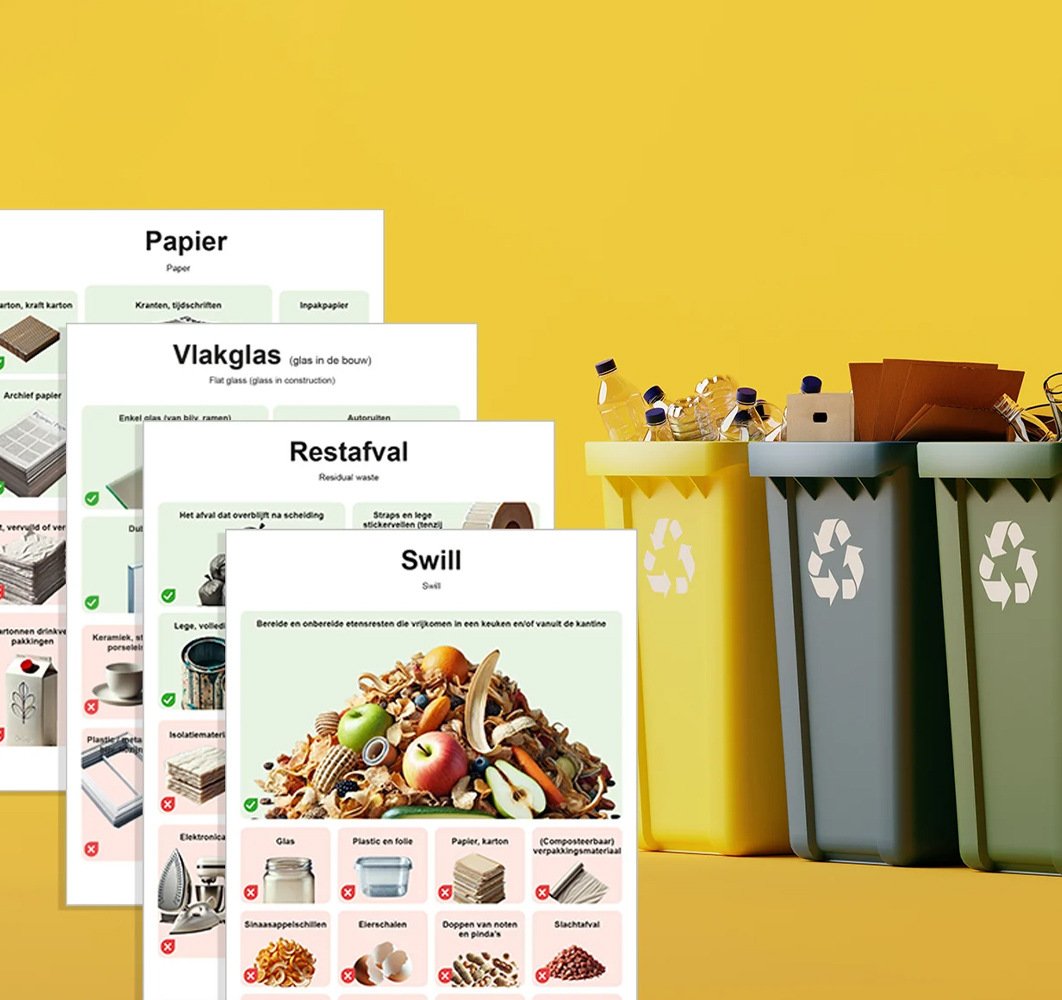
Labeling may seem like something for later, but it plays a bigger role than is often realized. The PPWR is moving toward a more harmonized system of symbols and pictograms, making it clearer more quickly what materials packaging is made of and how it should be sorted. This not only helps consumers but also improves the quality of recycling streams and consistency within the European market.
For companies, this means that design and inventory cannot be considered in isolation from future labeling requirements. Those who already take into account space, material information, and the adaptability of packaging designs will avoid having to redesign the same packaging again in a few years. Thus, labeling affects not only communication but also design, planning, and future-proofing.
Read more about EU waste labels and PPWR

PPWR requires more than just knowledge of the rules. It requires an overview, insight, and choices that align with your organization’s day-to-day operations. Milgro helps companies approach packaging issues not as a standalone compliance project, but as part of a broader packaging and circular strategy. This includes understanding materials and volumes, analyzing packaging and waste streams, proposing optimization strategies, providing support with documentation, and gaining control over data.
This creates room not only to comply with regulations but also to manage costs, waste, supply chain collaboration, and future packaging choices more effectively. That is precisely where the added value of a practical partner lies.
You can find frequently asked questions here
No rights may be derived from this information. For the most up-to-date and legally binding information, we always recommend consulting official EU sources.


The transition from understanding to action only becomes truly valuable once you gain insight into your own situation. What packaging streams are involved? Where are the biggest risks or opportunities? And where do you start if you can’t tackle everything at once? A waste scan gives you an initial overview of your streams, data, and potential for optimization.
Take the online waste scan and gain insight into your potential for improvement—from cost savings to environmental benefits—in just 10 minutes.
